
Mejora tu posición en YouTube: Guía paso a paso del algoritmo
Introduction: Unlocking YouTube’s Algorithmic Secrets for Visibility
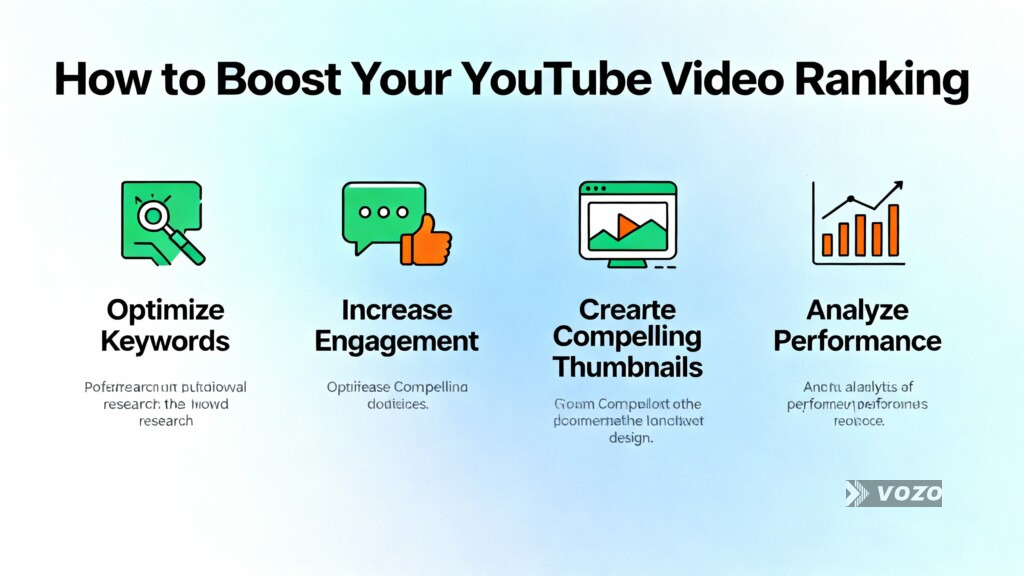
YouTube is the world’s second-largest search engine and the dominant video platform. That means your next viewer is often not found on Google or social media but discovers you directly inside YouTube. Rankings do not happen by luck. YouTube’s algorithm decides what appears in Search, Suggested Videos, and Browse, and its core principle is simple: it prioritizes audience experience.
I’ll show you how to increase YouTube video ranking using a comprehensive, fact-based process you can repeat for every upload. This guide explains what matters, why it matters, and concrete steps you can take to send the right signals to the algorithm.
What is YouTube Video Ranking?
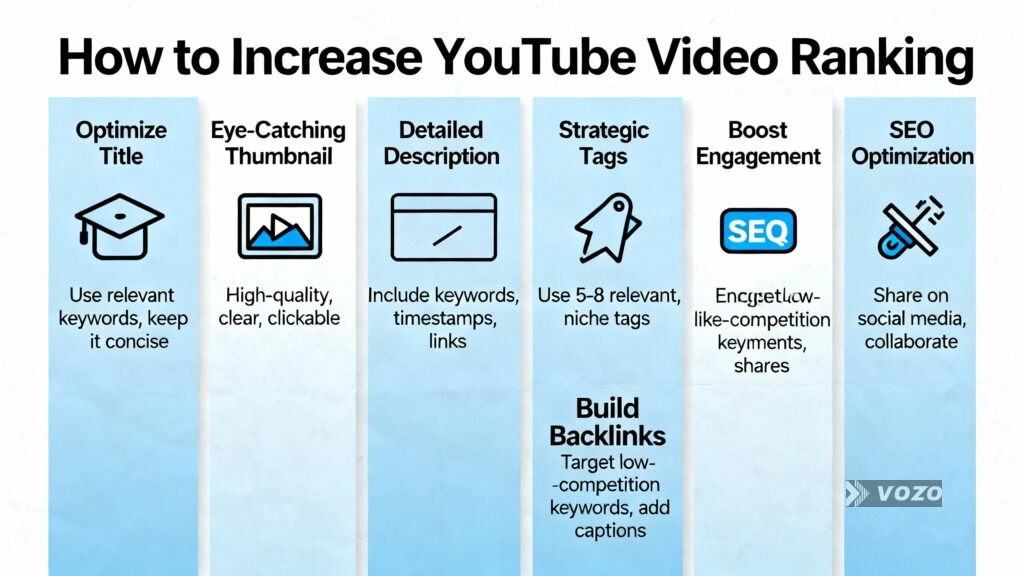
YouTube video ranking describes where your video appears across key discovery surfaces such as:
- YouTube Search results – keyword intent and metadata matter a lot
- Suggested Videos – viewer behavior, watch time, and satisfaction signals
- Browse features like Home – personalization, strong packaging, and momentum
Ranking is not decided by a single metric. Like Google, YouTube uses a multi-factor system. Your goal is to send consistent signals that your video is relevant, clickable, and satisfying to watch so the platform tests and distributes it to the right viewers.
Requisitos previos y herramientas necesarias
3.1 Essential accounts & access
- Verified YouTube Channel – required for uploading and advanced features
- Cuenta de Google – needed for channel management and analytics
- Access to YouTube Studio – video management, analytics, and settings
3.2 Video production & editing tools
- High-quality camera – DSLR, mirrorless, or a strong smartphone camera
- Good microphone – USB mic or lavalier mic for clear audio
- Video editing software:
- Adobe Premiere Pro
- DaVinci Resolve
- Final Cut Pro
- KineMaster
- Thumbnail creation software:
- Adobe Photoshop
- Canva
- GIMP
3.3 SEO & analytics tools
- YouTube Analytics – built-in performance tracking
- Google Keyword Planner – keyword ideas and volume
- TubeBuddy – keyword research, A/B testing, tags, competitor analysis
- vidIQ – keyword research, optimization suggestions, analytics
- Google Trends – topic and query trends
3.4 Other essential resources
- Reliable internet connection – uploads are heavy
- Branding assets – logo, channel art, and end screen templates
- Understanding of your target audience – demographics and psychographics
Step-by-Step: How to Increase YouTube Video Ranking
Paso a paso
Understand how the YouTube algorithm works
Time estimate: 1 to 2 hours. The algorithm is audience-first. It learns from viewer behavior and connects each user with videos they will enjoy while maximizing watch time on the platform.
Core principles to know
- Audience-centricity – recommendations are driven by what viewers enjoy
- Maximizing watch time – YouTube wants users to keep watching
- Multi-factor ranking – many signals matter, not one
- Engagement and user behavior – key inputs for recommendations
- Long-term relevance – videos that sustain interest keep getting shown
- Continuous updates – changes are evolutionary rather than revolutionary
What the algorithm prioritizes for each viewer
- Viewer habits such as past watch history and interactions
- Video performance like watch time, CTR, and engagement
- Context including topic, language, and upload time
- Personalization where different users see different recommendations
Conclusión práctica: before optimizing, decide who the video is for and what outcome they want. Audience fit is the foundation the algorithm rewards.
Do on-page YouTube SEO for discoverability
Time estimate: 1 to 3 hours per video. On-page SEO tells YouTube what your video is about so it can test it with the right audiences. Do this consistently to improve chances in Search and recommendations.
2.1 Keyword research for YouTube
Use native YouTube signals and external tools:
- Type your topic into YouTube search and capture autosuggest phrases
- Check “searches related to” at the bottom of results
- Use Google Keyword Planner, TubeBuddy, or vidIQ for volume and competition
- Study competitors for repeated phrases in titles, descriptions, and tags
- Prioritize long-tail keywords for clearer intent
Ejemplo: instead of “sourdough,” target “how to bake sourdough bread for beginners” to capture clearer intent and easier ranking.
2.2 Craft a compelling, keyword-rich title
- Put the primary keyword at or near the beginning naturally
- Keep it under 60 characters to reduce truncation in feeds
- Make it benefit-driven and accurate
Example title: “Master Sourdough: A Beginner’s Guide”
Consejo de seguridad: avoid clickbait. Overpromising lowers watch time and retention, hurting rankings.
2.3 Write a detailed, optimized description
- Aim for 200 to 500 words as a strong starting point
- Put the most important keyword and a clear call to action in the first 1 to 2 sentences
- Add links to relevant playlists, related videos, your website, and social profiles
- Add timestamps to improve user experience and give YouTube extra context
Keyword density rule: write naturally and avoid stuffing.
2.4 Use tags strategically
Tags matter less than titles, descriptions, and watch time but still provide context.
- Use a mix of broad and specific tags
- Include your main keyword, variations, and common misspellings
- Add branded channel tags and your channel name
- Avoid irrelevant or excessive tags
Myth-busting: your raw video file name has insignificant impact compared with metadata and watch metrics.
2.5 Design high-quality custom thumbnails
- Use 1280×720 pixels with a minimum width of 640 pixels
- Choose clear imagery and readable text
- Keep thumbnail design consistent with brand colors and fonts
- Ensure the thumbnail matches the content promise
Use tools like TubeBuddy or vidIQ to A/B test thumbnail designs.
2.6 Add closed captions and subtitles
- Captions improve accessibility and help silent viewers
- They add textual context that can help YouTube understand content for Search
- Consider multilingual subtitles to expand global reach
Use YouTube’s auto-captions as a start, then edit for accuracy.
2.7 Safety note: avoid keyword stuffing
Keyword stuffing degrades user experience and may be penalized.
2.8 Expert tip: update older metadata carefully
Updating thumbnails, descriptions, and pinned comments can revive evergreen videos, but changes can reset the algorithm’s learning. Make improvements intentionally and monitor results.
Optimize for audience engagement metrics
Ongoing. YouTube uses engagement metrics to evaluate quality and satisfaction. Videos that keep viewers watching and interacting are favored.
3.1 Maximize watch time and audience retention
Watch time is arguably the most critical ranking factor. Practical tactics:
- Hook viewers in the first 15 to 30 seconds
- Cut dead air and keep pacing tight
- Deliver on the title and thumbnail promise quickly
- Use pattern interrupts like visual changes or sound design
- Study retention graphs in YouTube Analytics and fix drop-off points
3.2 Increase click-through rate (CTR)
- Align title and thumbnail so they are specific and honest
- A/B test titles and thumbnails
- Build a consistent visual style so your videos are instantly recognizable
3.3 Foster likes and dislikes signals
- Ask viewers to like if the video helped, but focus on earning the like
- Treat unusually negative feedback as an indicator of content quality problems
3.4 Encourage comments
- Ask open-ended questions in the video
- Reply promptly to start conversations and boost engagement
- Highlight good ideas and thank contributors
3.5 Drive shares
- Remind viewers to share with someone who needs the solution
- Prompt sharing at moments when the content delivers clear value
3.6 Cultivate subscriber growth from specific videos
- Add a clear subscribe call to action, especially near the end
- Explain the value proposition of subscribing
3.7 Expert tip: engage beyond videos
Use comments and the Community tab to build loyalty and encourage repeat viewership.
Improve content quality and production
Variable time. SEO gets the click, quality keeps the viewer. Long-term performance depends on viewer satisfaction.
4.1 Upload high-resolution video
- Aim for 1080p or 4K when possible
- Common formats include MP4, MOV, and AVI
4.2 Ensure clear audio
- Poor audio is a top reason viewers abandon videos
- Use a good microphone and monitor levels to avoid clipping
- Record in a quiet space with minimal background noise
4.3 Use engaging editing techniques
- Keep pacing dynamic and intentional
- Add B-roll, graphics, text overlays, and motion graphics where helpful
- Use smooth, purposeful transitions and structure the edit like a story
4.4 Structure content for impact
Plan beginning, middle, and end to reduce rambling and boost retention:
- Beginning: hook
- Middle: deliver the value
- End: summarize and call to action
4.5 Deliver a strong value proposition
Decide the why of the video: entertainment, education, inspiration, or solving a specific problem. Great content plus compelling thumbnails remains paramount.
4.6 Safety tip: avoid copyrighted material
Using copyrighted music or imagery without licensing can trigger Content ID claims, demonetization, or worse.
Build channel authority and consistency
Ongoing. YouTube evaluates channel health and authority when ranking videos.
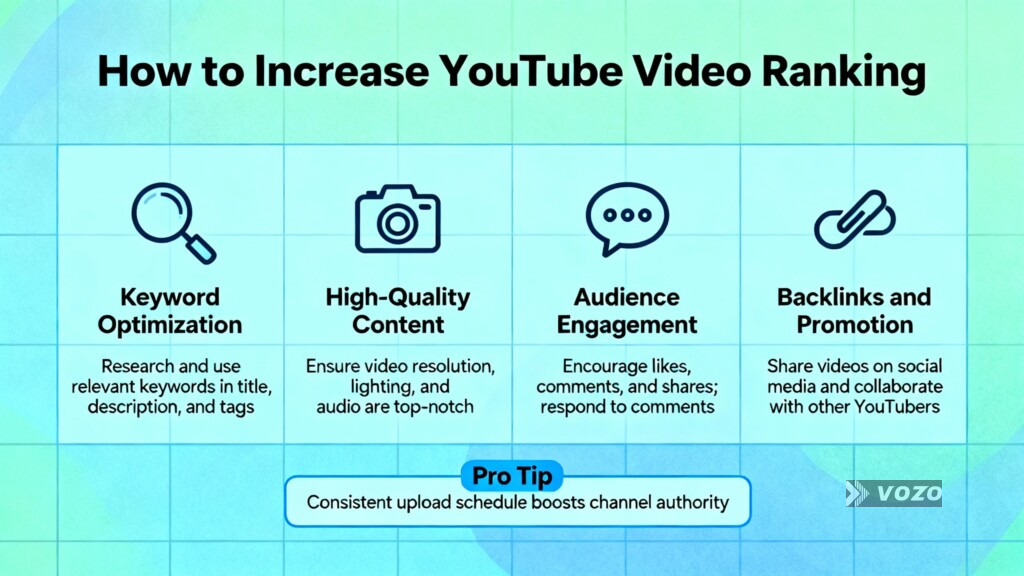
5.1 Maintain a consistent upload schedule
- Regular uploads signal reliability and build viewing habits
- Pick a schedule you can keep such as weekly or biweekly
5.2 Develop channel authority
Signals of authority include a history of high-performing videos, a substantial subscriber base, consistent engagement, and niche specialization.
5.3 Organize videos with playlists
- Playlists increase session watch time by encouraging multi-video viewing
- They clarify channel themes and improve topical relevance
5.4 Use end screens and cards
- End screens push viewers to the next video, playlist, or subscribe in the last 5 to 20 seconds
- Cards link to relevant content during the video without disrupting flow
5.5 Create an engaging channel trailer
For non-subscribers, a 30 to 60 second trailer should explain who the channel is for, show what you publish, and give a clear reason to subscribe.
5.6 Use the Community tab
- Post polls, updates, behind-the-scenes content, and prompts for comments
5.7 Expert tip: consistent branding
Align channel art, thumbnails, and intros to strengthen recognition and authority.
Promote and distribute your videos
Ongoing. Off-platform signals like embeds, backlinks, and social mentions can indirectly support YouTube performance by driving traffic and early engagement.
6.1 Promote on social media
- Share on Facebook, X, Instagram, LinkedIn, and TikTok
- Tailor the hook and format for each platform and include a direct link
6.2 Embed videos on your website or blog
Embedding can drive external traffic, increase watch time, and reinforce topical relevance when placed inside related content.
6.3 Use email marketing
Email subscribers are high-intent viewers. Send a dedicated new video email with a clear call to action to watch.
6.4 Collaborate strategically
Collaborations expose you to aligned audiences and often lead to cross-promotion and faster subscriber growth.
6.5 Cross-promote on other platforms
Mention and link your YouTube channel in podcasts, webinars, online courses, newsletters, and communities to create an ecosystem of referrals.
6.6 Leverage YouTube Shorts
Shorts often get a dedicated discovery push and can funnel viewers to long-form content. Post teasers, highlights, or quick tips and reference the full video in a pinned comment or end prompt.
6.7 Go live on YouTube
Live streams can boost watch time, deepen community via real-time interaction, and become VOD replays after the stream.
Analyze performance and adapt
Weekly or monthly. YouTube success is iterative. Use data to improve and refine your approach.
7.1 Deep dive into YouTube Analytics
- Monitor watch time, average view duration, and CTR
- Check traffic sources like Search, Suggested, Browse, and External
- Study audience demographics and the retention graph for drop-off points
Turn insights into edits for future scripts, intros, thumbnails, and topics.
7.2 Implement A/B testing
Use TubeBuddy or vidIQ A/B testing for thumbnails, titles, and descriptions. Make decisions based on measurable lift.
7.3 Respond to trends
Use Google Trends and niche observation to create timely content. Ranking factors evolve, but best practices are refined rather than replaced.
7.4 Optimize older videos
- Update titles, descriptions, tags, and thumbnails for evergreen videos
- Add new end screens and cards to push newer videos
- Refresh pinned comments with updated links and context
7.5 Safety tip: avoid frequent drastic metadata changes
Too many changes can confuse performance tracking and may reset algorithm learning. Revert or wait if performance dips significantly.
7.6 Expert tip: set a review cadence
Run monthly or quarterly reviews to spot patterns and refine strategy.
Pros and Cons of These Ranking Methods
Pros
- Builds sustainable growth through watch time, retention, and satisfaction
- Improves discoverability in both Search and recommendations
- Strengthens long-term performance by optimizing evergreen videos
- Develops channel authority rather than relying on one-off viral spikes
- Aligns with YouTube’s audience-first algorithm approach
Contras
- Results can take time because YouTube tests content gradually
- Requires ongoing analysis and iteration using YouTube Analytics
- Metadata changes can temporarily reduce performance if they reset learning
- Production improvements, especially audio, may require upfront investment
- No single factor guarantees ranking due to YouTube’s multi-factor system
Errores comunes que hay que evitar
- Keyword stuffing in titles, descriptions, or tags
- Misleading titles or thumbnails that cause high CTR but low retention
- Ignoring audience retention and focusing only on views
- Inconsistent upload schedule that disrupts viewer habits
- Poor audio quality – viewers tolerate soft video issues more than bad sound
- Neglecting YouTube Analytics and repeating avoidable mistakes
- Failing to engage with comments and the community
- Using copyrighted material without licensing – Content ID claims and demonetization risk
- Not optimizing older content – evergreen videos can be revived
- Over-relying on one ranking factor instead of a holistic strategy
Solución de problemas
7.1 Low views or discoverability
Problem: Not showing in Search or Suggested. Solución: Recheck keyword research, ensure the primary keyword is in title and description, improve thumbnail CTR, and confirm the video is public.
7.2 High CTR but low watch time
Problem: People click then leave quickly. Solución: Packaging may be misleading or the intro is weak. Review retention drop-offs, improve the first 30 seconds, and tighten pacing.
7.3 Low audience retention
Problem: Viewers abandon early. Solución: Improve audio, structure, and pacing. A/B test different intros.
7.4 Video not being recommended
Problem: Low Suggested or Browse traffic. Solución: Focus on watch time and retention. Use end screens, cards, and playlists to keep viewers watching within your channel.
7.5 Difficulty ranking for specific keywords
Problem: Not appearing for target terms. Solución: Choose more specific long-tail keywords, reassess competition, improve channel authority, and confirm content matches keyword intent.
7.6 Comment section spam
Problem: Irrelevant or malicious comments. Solución: Use YouTube Studio moderation settings, hold potentially inappropriate comments, and report and block spammers.
7.7 Performance dip after metadata change
Problem: Views drop after changing title, thumbnail, or description. Solución: Metadata updates can reset learning. Revert if the dip is severe or give it time to re-evaluate and monitor closely.
7.8 Channel authority not growing
Problem: Uploading consistently but slow growth. Solución: Re-evaluate niche and audience, improve value proposition, increase engagement, and consider collaborations.
PREGUNTAS FRECUENTES
8.1 How important is watch time for ranking?
Watch time is arguably the most critical ranking factor because YouTube prioritizes videos that keep viewers on the platform longer.
8.2 Do likes and comments directly affect ranking?
They are important engagement signals but typically less impactful than watch time. They indicate satisfaction and interaction, which can indirectly improve distribution.
8.3 Are YouTube tags still relevant in 2025?
Yes, but their impact is relatively small compared with titles, descriptions, and watch time. Tags still add helpful context.
8.4 Should I change my video’s metadata after publishing?
Yes, especially for optimizing older videos. Remember that metadata changes can reset algorithm learning and cause temporary dips, so act intentionally.
8.5 How often should I upload videos to rank higher?
Consistency matters more than raw frequency. Choose a schedule you can maintain to build audience habits.
8.6 Does external promotion help YouTube ranking?
Yes. Social promotion, embeds, and backlinks can drive early traffic and engagement, which supports algorithm testing and visibility.
8.7 What’s the best way to do keyword research for YouTube?
Start with YouTube autosuggest, then validate with TubeBuddy, vidIQ, and Google Keyword Planner. Analyze competitor metadata for patterns and repeated phrases.
8.8 Is 4K necessary for ranking?
No. 1080p is generally sufficient. Clear audio, strong retention, and great packaging matter more than resolution alone.
8.9 How long should YouTube descriptions be?
Aim for 200 to 500 words. Put key info in the first sentences, include links, and add timestamps.
8.10 Can YouTube Shorts help long-form ranking?
Yes. Shorts can drive discovery and funnel viewers to your long-form library, increasing watch time and subscriber growth.
If you want to increase YouTube video ranking, stop chasing hacks and start sending the signals YouTube actually rewards: audience satisfaction, strong watch time, smart metadata, and consistent authority-building. The playbook in 2025 is largely the same but refined. Your next step: pick one existing video and apply this process today. Improve the thumbnail, tighten the first 30 seconds on your next upload, add chapters, and link the video into a relevant playlist. Then track CTR, retention, and traffic sources in YouTube Analytics for the next two weeks and iterate.