
German Subtitles for Documentaries: Step-by-Step
Getting German subtitles for documentaries is one of the fastest ways to expand distribution, improve accessibility, and make your film feel native to German-speaking viewers. I’ll show you how to plan, generate, polish, and deliver documentary subtitles in German without breaking your schedule or your budget.
What are German subtitles for a documentary?
German subtitles are time-coded lines of translated dialogue (and sometimes speaker labels and sound cues) that appear on screen in sync with the audio. Typically, they are delivered as a subtitle file such as:
- SRT (SubRip Subtitle): the most widely compatible option
- VTT (Web Video Text Tracks): common for web players
- Other formats you may encounter from professional workflows: SCC そして XML
Subtitles can be soft subtitles (a separate file that viewers can toggle on or off on platforms like YouTube and Vimeo) or hardcoded subtitles (burned into the video so they are always visible).
Prerequisites and tools you’ll want ready
Before you start translating documentary subtitles to German, gather these essentials. Doing this up front saves real time later, especially in review and spotting (timing).
-
Original video file
- Formats: MP4, MOV, AVI, MKV
- Preferably HD or 4K (SD is usually supported)
- Clear audio is critical for accurate transcription (especially with AI)
-
Original transcript (optional but recommended)
- Formats: TXT, DOCX, or an existing SRT
- A time-coded transcript reduces cost for human services and improves AI accuracy
-
Internet connection
- Stable broadband, ideally at least 10 Mbps upload for large files
-
Editing tools (optional)
- Adobe Premiere Pro, DaVinci Resolve, Final Cut Pro, AVID Media Composer (for importing and exporting subtitles)
-
Subtitle editing tools (optional)
- Subtitle Edit, Aegisub, or built-in editors in online platforms
-
Budget and payment method
- Many projects land anywhere from €500 to €5000+, depending on length and approach
-
Target audience profile and cultural context
- General audience vs academic vs youth changes tone and terminology choices
- Consider regional nuance if relevant (Swiss German vs Austrian German vs Germany)
Step-by-step: German subtitles for your documentary
ステップバイステップのワークフロー
Understand why German subtitles matter for documentaries
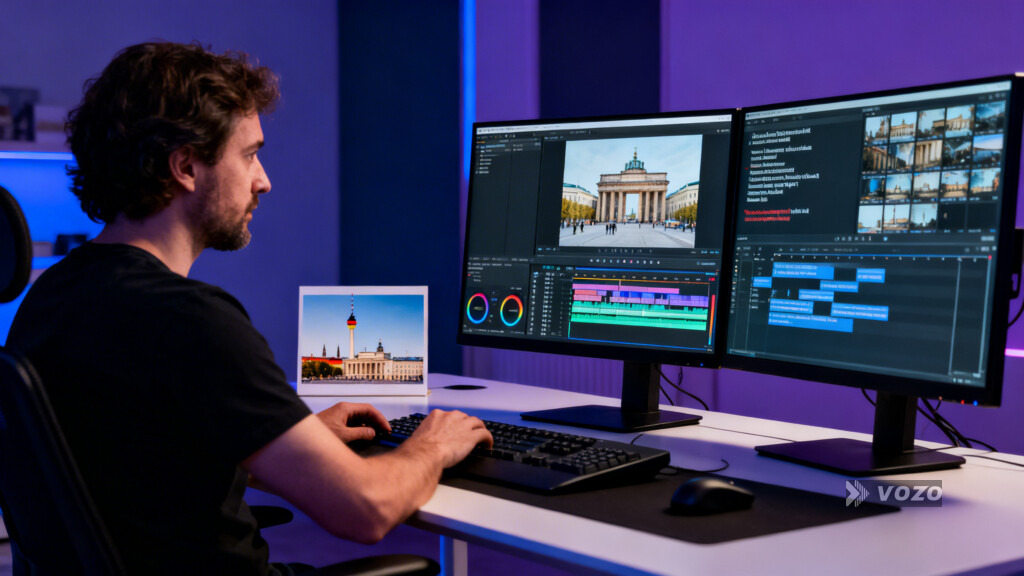
Germany is Europe’s largest economy and a major market for documentary distribution, so localization is often the difference between a niche release and a real international run.
Key reasons documentary German subtitles are worth doing right:
- Audience expansion: Subtitles typically expand reach by 25 to 30% on average, including viewers who prefer subtitles and viewers with hearing impairments.
- Better engagement: High-quality German localization improves comprehension and emotional connection, especially when topics are complex (history, science, politics).
- Accessibility compliance: Subtitles support accessibility requirements that apply in many European contexts.
- Distribution readiness: German subtitles help with delivery to German public broadcasters like ARD そして ZDF, streaming catalogs like Netflix Germany そして Prime Video DE, and film festivals.
- Accuracy protects intent: Documentaries often include careful wording, expert quotes, and sensitive claims. Translation mistakes can cause misinterpretation.
- SEO benefits: German subtitles can improve discoverability on platforms like ユーチューブ, because your content becomes searchable in German.
専門家のアドバイス If your documentary targets a specific German-speaking region, consider dialect and localized phrasing early (for example, Austrian German vocabulary differs in small but noticeable ways).
時間の見積もり: 1 to 2 hours for planning, audience definition, and deciding what good looks like.
Choose the best method for German subtitle creation
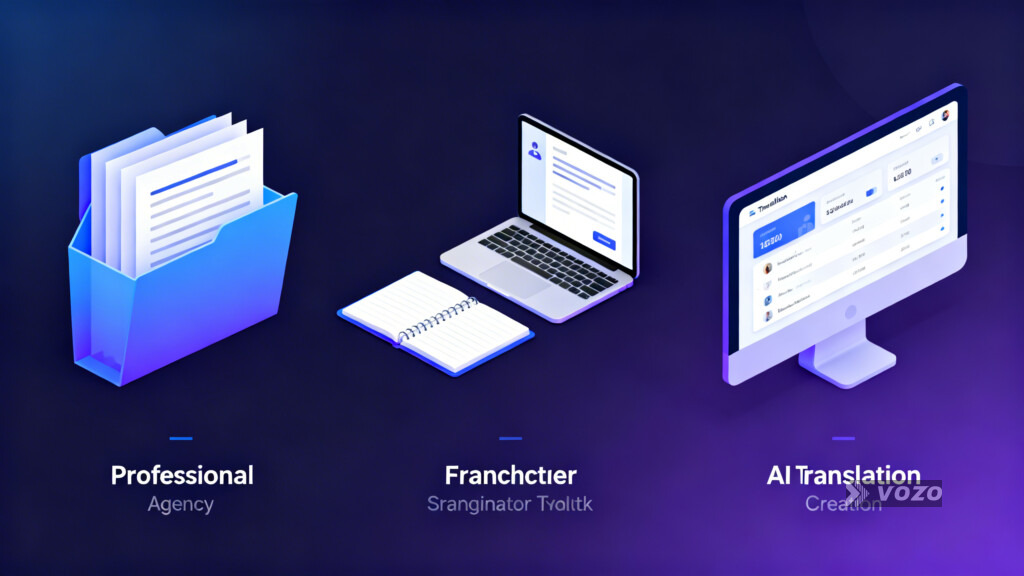
There are three primary methods to get subtitles in German for your documentary:
- Professional subtitling services (highest control and QA)
- Freelance German translators and subtitlers (flexible, often cost-effective)
- AI-powered subtitling tools (fast, budget-friendly first drafts)
Your choice should be driven by:
- Budget
- Required accuracy (especially for technical, historical, or sensitive genres)
- Turnaround time
- Need for add-ons like SDH, formatting, burned-in subtitles, or platform-specific delivery
安全のヒント Always back up your original video file before uploading anywhere or sending it out.
時間の見積もり: 2 to 4 hours to compare options and confirm deliverables.
Option A (highest accuracy): Use professional German subtitle services
Professional providers typically assign native German linguists who specialize in subtitling, not just translation. The best services include:
- Transcription (if needed)
- 翻訳
- Spotting (timing)
- Quality control, often by a second linguist
- Output in multiple formats (SRT, VTT, SCC, XML)
Known providers for German subtitling include HappyScribe そして Matinee.co.uk. Other services exist as well, but prioritize those with documentary experience and clear QA.
Turnaround and cost:
- Turnaround can be 12 to 24 hours for standard projects, with rush options.
- Pricing is commonly per minute, typically £6 to £26 per minute, often with minimum fees (for example £60).
- Costs vary with audio quality, complexity, and special requirements such as SDH (Subtitles for the Deaf and Hard of Hearing).
専門家のアドバイス Ask for a sample translation of a short segment before committing to the full documentary.
時間の見積もり: 1 to 3 days for quote, selection, and initial delivery.
Option B (balanced): Hire a freelance German subtitler
Freelancers can be a great middle path: direct communication, tailored terminology decisions, and often lower cost than agencies.
Where to find qualified German subtitlers:
- Freelancer.com
- Upwork
How to vet properly:
- Review portfolio and prior documentary samples
- Check reviews and reliability
- Request a short paid test translation (more realistic than unpaid samples)
Typical pricing models you’ll see:
- Per video minute: around €6.5 per minute for translation and €2.5 per minute for quality control (QC)
- Per word: roughly $0.10 to $0.14 per word
- Proofreading can be around €0.06 per word
重要だ: Agree on deliverables (SRT or VTT), deadlines, revision rounds, and whether spotting is included.
専門家のアドバイス For high-stakes documentaries, consider two freelancers: one to translate, another to independently review and proofread.
時間の見積もり: 3 to 7 days for sourcing, vetting, and delivery.
Option C (fastest): Use AI tools, then human-edit
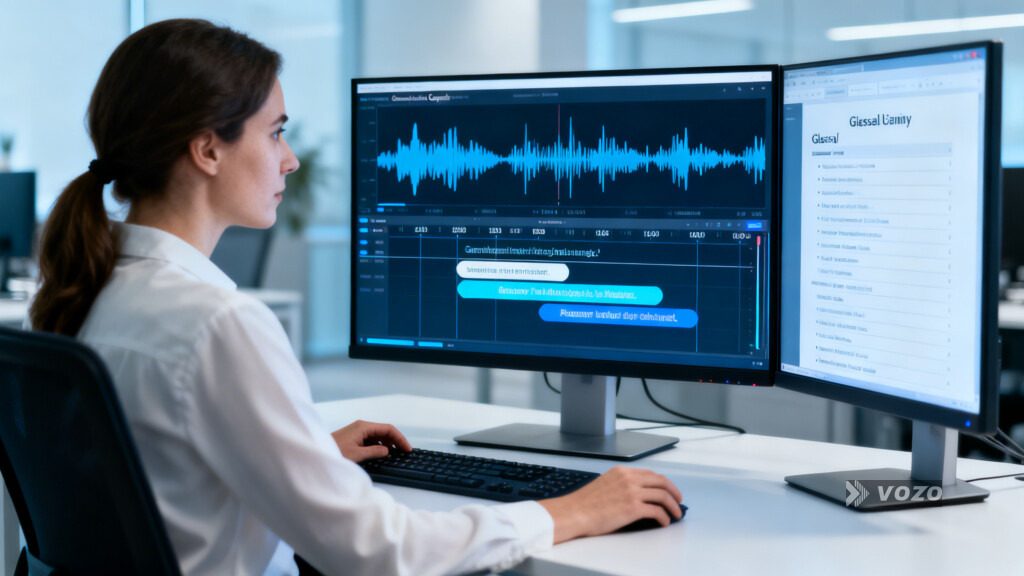
AI subtitling uses speech-to-text plus machine translation to produce a timed subtitle file quickly, often in minutes. This can be ideal for tight schedules, early cuts, or budget constraints, but documentaries still need human review for nuance and terminology.
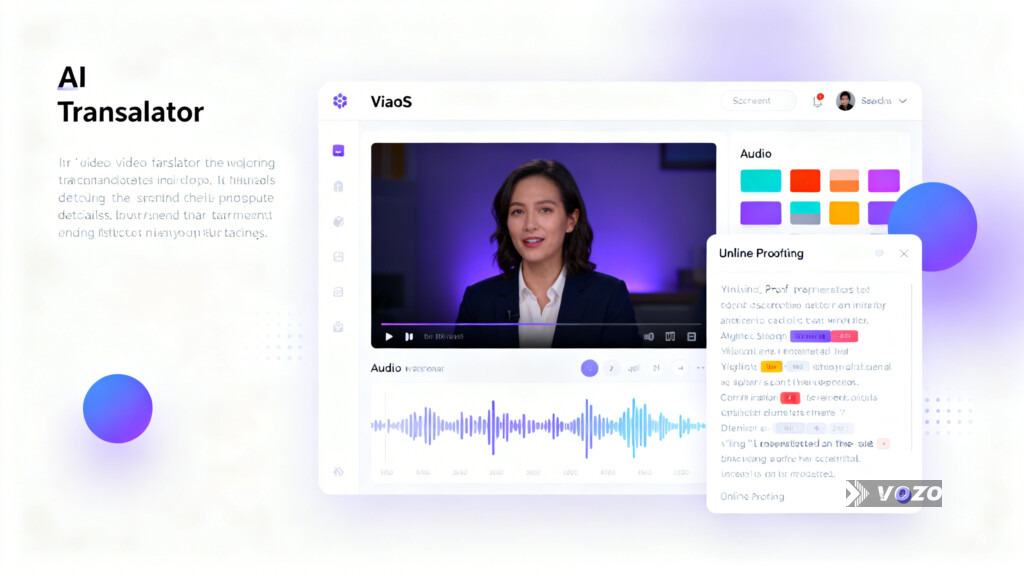
A practical workflow is to generate a draft with an AI tool and then edit it thoroughly. For example, Vozo’s Video Translator can translate your video into German while generating subtitles, and it also supports:
- Natural dubbing
- Voice cloning with ボイスリアル
- Optional lip sync with リップリアル
- A built-in proofreading editor for real-time refinement
If you are also considering German voiceover, Vozo’s AI Dubbing can auto-dub videos in 60+ languages (including German) with AI voices that match tone and pacing, which can complement your subtitle deliverables.
For studios and production teams that need scale, the Vozo API supports integrating translation and dubbing capabilities into a larger workflow (and is also available via AWS Marketplace).
安全のヒント Always manually review AI subtitles, especially for sensitive scenes, specialist vocabulary, and names.
時間の見積もり: 1 to 2 hours for AI generation and setup, then 4 to 8 hours per hour of video for careful human review and editing.
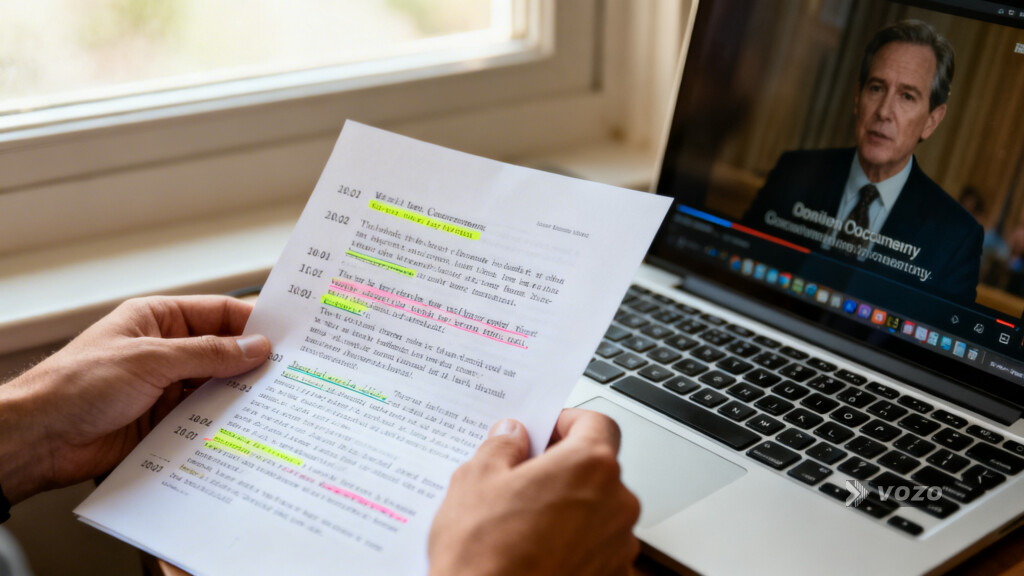
Review and refine (the step that makes it festival-ready)
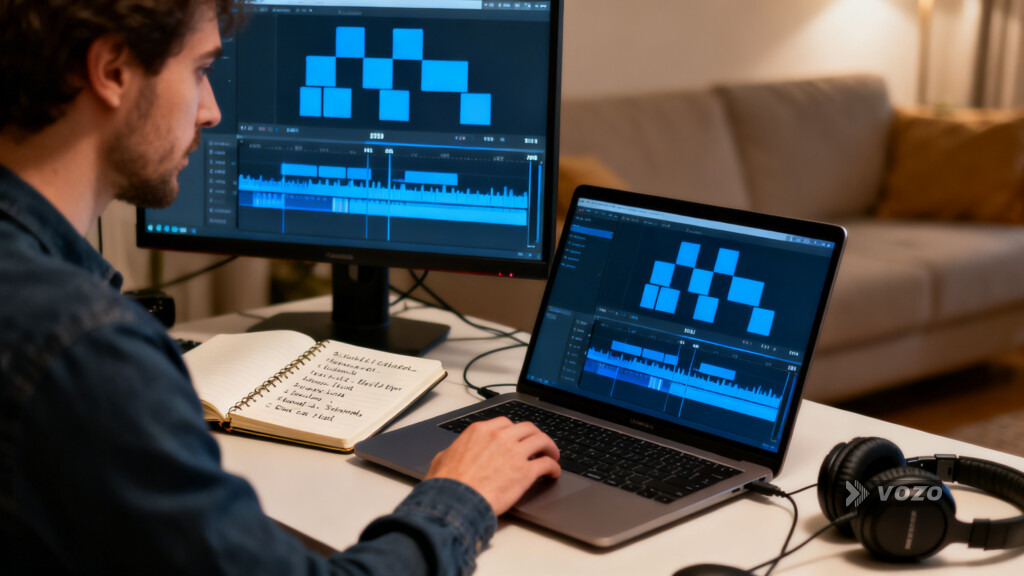
This is the most important step regardless of how you generated the subtitles. A solid review pass is where subtitles stop feeling like a translation and start reading like they belong in the film.
Quality checklist:
- Linguistic accuracy: grammar, clarity, and correct meaning
- Terminology: consistent translation of key terms (especially for science, history, medicine, law)
- Cultural appropriateness: idioms and references should feel natural in German
- Sync and timing: subtitles should enter and exit with speech
- Readability: typically 3 to 7 seconds on screen per subtitle frame
- Formatting standards: 37 to 42 characters per line, maximum two lines per subtitle frame, and clean line breaks that follow natural phrasing
- Proofreading: punctuation, capitalization, and consistent style
Tools:
- Subtitle Edit or Aegisub for granular timing and formatting
- Built-in editors, such as the proofreading editor inside Vozo’s Video Translator, for fast iteration
専門家のアドバイス Have a native German speaker who was ない involved in the translation do the final QC pass.
時間の見積もり: 4 to 10 hours per hour of video for thorough review.
Integrate and export German subtitles correctly
Most deliverables start with SRT and sometimes VTT. What you export depends on whether the subtitles are meant to be optional (soft) or permanently embedded (hardcoded).
Common integration paths:
- YouTube and Vimeo: upload SRT or VTT as soft subtitles so viewers can toggle on or off.
- Editing software: import the SRT into Adobe Premiere Pro (or similar), place it on a subtitle track, and adjust timing if needed.
- Hardcode (burn-in): export the video with subtitles embedded permanently.
Hardcoding best practices:
- Fonts: use highly readable options such as Arial or Helvetica
- Maintain strong contrast, consider a subtle outline or shadow
- Use a semi-transparent background box if scenes are visually busy
- Ensure export settings match the original frame rate and resolution
Mobile workflow: If you need captions on the go for social cutdowns, Vozo’s Video Editor (BlinkCaptions) supports mobile caption and subtitle editing.
専門家のアドバイス Deliver both a soft subtitle file (SRT) and a hardcoded version whenever possible. Distributors often appreciate the flexibility.
時間の見積もり: 1 to 3 hours for integration, export, and device testing.
それぞれの方法の長所と短所
Professional German subtitle services
長所
- Highest accuracy and cultural nuance
- Strong QA processes and industry-standard formatting
- Often fast turnaround, including 12 to 24-hour rush
短所
- Highest cost (often £6 to £26 per minute plus minimum fees)
- Less direct control than working with a single person
Freelance German subtitlers
長所
- Direct communication and tailored terminology
- Flexible pricing (per minute or per word)
- Great for niche subjects when you find the right specialist
短所
- Requires vetting and project management
- Quality varies more than agencies unless you test carefully
AI-powered tools (with human review)
長所
- Fastest initial draft, often in minutes
- Very cost-effective for early cuts and tight budgets
- Easy to iterate, especially with built-in editors
短所
- Human review is essential for documentaries
- Risk of mistranslating names, technical terms, or sensitive phrasing without QC
避けるべき一般的な間違い
- Underestimating human review (AI-only is risky for credibility)
- Ignoring cultural nuance (literal translations often fall flat in German)
- Poor timing and sync (distracting and frustrating to watch)
- Bad formatting (too many characters per line, unreadable fonts, awkward line breaks)
- Not specifying audience and context to the translator
- Using low-quality audio (hurts transcription accuracy and increases edit time)
- Choosing the cheapest option without vetting
- Neglecting data privacy and security with third-party services
- Failing to back up original files
- Not testing subtitles across TV, desktop, and mobile
トラブルシューティング:よくある問題を素早く解決
Issue: Subtitles are out of sync
- Use the player’s subtitle delay setting if available
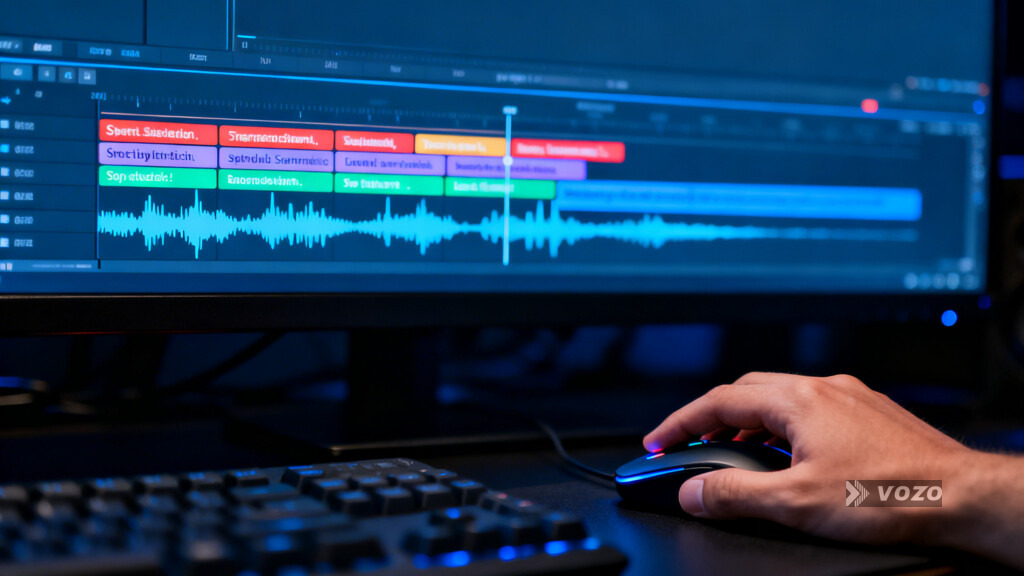
- In Subtitle Edit, use Shift Times or Adjust All Times
- Re-export from your editor with correct subtitle track alignment
Issue: AI subtitles have major errors or awkward phrasing
- Correct in an editor such as the one inside Vozo’s Video Translator
- Hire a German proofreader for MTPE (machine translation post-editing)
- Provide a high-quality transcript to improve AI input
Issue: Subtitles are too fast or too slow
- Extend duration of key frames
- Split long sentences into multiple frames
- Merge very short consecutive frames when they are one thought
Issue: Subtitles not displaying on YouTube
- Confirm format (SRT is safest)
- Follow platform upload guidelines
- Re-upload, as display issues can be temporary
Issue: Terminology is inconsistent
- Provide a glossary with preferred German terms
- Verify with subject matter experts
- Tighten the source script for clarity before translation (helps AI and humans)
Issue: Subtitles hard to read on bright or complex scenes
- Add a semi-transparent background box when burning in
- Use high-contrast styling (white with black outline or shadow)
- Increase font size without covering important visuals
Issue: Professional services exceed budget
- Use a hybrid workflow: AI draft plus freelance proofreader
- Negotiate per-word pricing if your documentary has less dialogue
- Prioritize human translation for critical segments, AI for less crucial sections (when appropriate)
FAQ: German subtitles for documentaries
What is the best file format for German subtitles?
SRT is the most universally compatible. VTT is also common, especially for web video.
How much does it cost to get German subtitles for a documentary?
Professional services often run £6 to £26 per minute. Freelancers may charge €6.5 per minute, plus QC, or $0.10 to $0.14 per word. AI is usually cheaper but needs post-editing.
Can I use Google Translate for documentary German subtitles?
It can produce a rough draft, but it is not recommended for professional documentaries because nuance, context, and terminology frequently suffer. Human review is crucial.
How long does it take to get German subtitles?
Rush professional delivery can be 12 to 24 hours. Freelancers often take 3 to 7 days. AI drafts can take minutes, but editing can add hours to days.
What is the difference between soft and hardcoded subtitles?
Soft subtitles are separate files viewers can toggle. Hardcoded subtitles are embedded into the video and cannot be turned off.
Do I need a transcript before getting German subtitles?
Not mandatory, but a good transcript can reduce cost and increase accuracy for both humans and AI.
How important is cultural context in German subtitles?
Extremely important. Documentaries rely on precision, and German audiences notice unnatural phrasing and mismatched tone.
Can I dub into German instead of subtitling?
Yes. Vozo’s AI Dubbing can generate German dubbing, and Vozo’s Video Translator also supports natural dubbing, voice cloning, and optional lip sync.
What if my documentary has multiple speakers?
Professional services and advanced AI tools can handle multi-speaker identification. Make speaker differentiation a requirement if clarity depends on it.
Is there a mobile app for editing subtitles on the go?
Yes, Vozo’s BlinkCaptions supports mobile caption and subtitle workflows.