
Intro
The short answer to the question, can Loom translate a video with AI? is No, not in the way most global teams and content creators require.
Loom, the popular asynchronous video communication tool, excels at recording, transcription, and internal team workflow automation. Its AI features—included in the Loom AI Suite—are powerful for productivity, but they stop short of providing the full, end-to-end video localization needed to reach international audiences. While Loom can automatically transcribe your video in over 50 distinct languages, it currently does not support transcript translation, voice cloning, or AI dubbing. Understanding this limitation is key to answering: can Loom translate a video with AI? For a video to truly serve a global market, you need a dedicated solution that includes AI video dubbing and full localization capabilities.
This article breaks down Loom’s actual language capabilities, explains the critical gap in its feature set, and introduces the dedicated tools that complete the localization workflow.
The Direct Answer: Can Loom Translate a Video with AI for Global Reach?
To understand the workflow wall users hit, it’s essential to be clear about Loom’s existing features. Loom’s core language support revolves around transcription, which forms the foundation for its loom ai captions translation feature.
Multi-Language Transcriptions, Not Translation
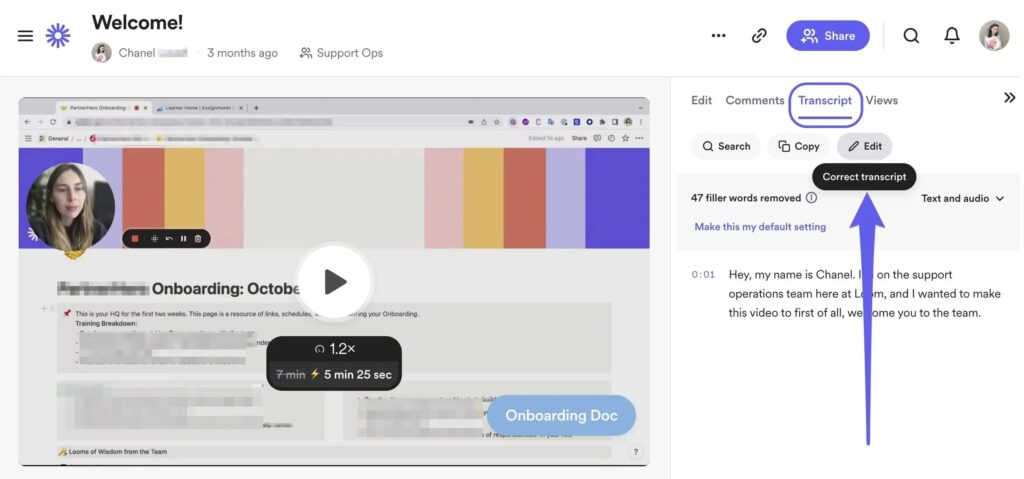
Loom utilizes AI to automatically generate a precise transcript of the spoken audio. This capability is widely available, even in the free Starter plan, and supports over 50 distinct languages, including Spanish, French, German, Japanese, and Hindi.
- The AI automatically produces a transcript in the detected language.
- The primary function of this transcript is to enable accessibility and AI workflows (summaries, chapters, tasks).
- Crucial fact: Loom’s official support documentation confirms that Loom does not support transcript translation. The transcript must be in the language spoken in the video.
What Loom Actually Supports Today
The closest Loom gets to translation is in the viewer interface, and it is a powerful accessibility feature:
- Viewers can select a language from the closed captions menu within the Loom player.
- The system uses AI to translate the closed captions based on the original transcript into the viewer’s chosen language.
- This is client-side translation, meaning the creator does not produce a new, translated version of the video; the viewer simply sees a loom ai captions translation overlay.
- Limitation: This only changes the text on the screen. The speaker’s voice remains in the original source language. For a definitive answer to can Loom translate a video with AI, you must acknowledge this voice limitation.
Where Loom Falls Short for Video Translation
Loom is fundamentally an internal communication and productivity tool. Its limitations become apparent when users need to move from internal transcription to external localization.
The Workflow Wall: No AI Dubbing
The biggest technical limitation is the absence of ai video dubbing. Full ai video translator services do three things that Loom does not:
- Translate the Script: Convert the source text into the target language.
- Clone/Generate the Voice: Use a AI voice cloning engine to replicate the original speaker’s voice in the new language or generate a new synthetic voice.
- Replace the Audio Track: Export a completely new video file with the foreign language audio track.
Loom cannot perform steps two and three. The creator cannot download a dubbed German version of their original English video. This is the definition of a workflow gap for global content teams.
No Lip-Syncing or Visual Alignment
Because Loom does not replace the audio track, it has no need for complex visual synchronization. For high-quality video translation ai tool output, the technology must:
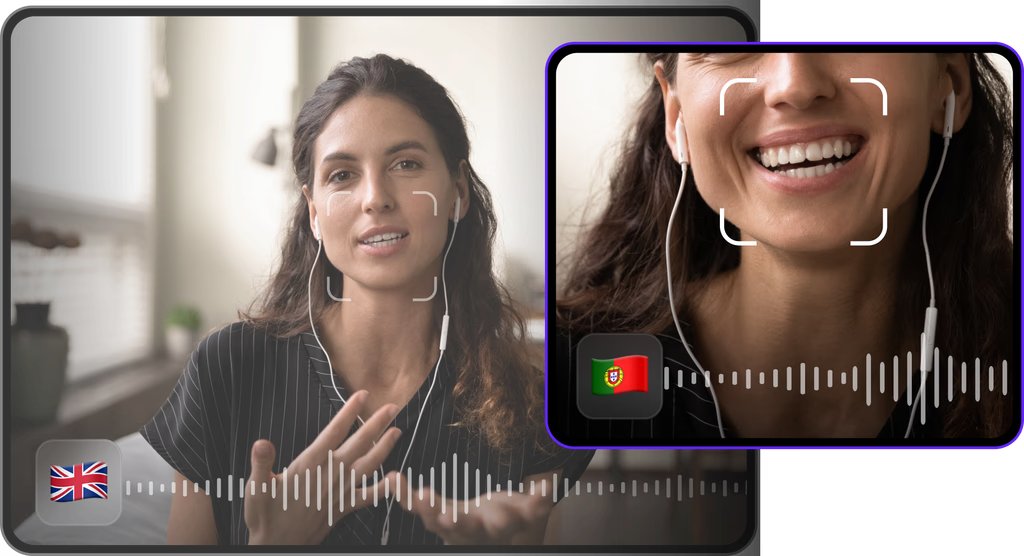
- Identify the speaker’s facial movements.
- Adjust the lip movements in the video to visually match the new translated audio phonemes.
- This feature, known as lip-sync, is crucial for producing natural-looking videos that audiences trust. Loom offers no such feature.
Exporting for External Tools (The Clunky Alternative)
Users who insist on $\text{translate loom video}$ externally must resort to a cumbersome, multi-step process:
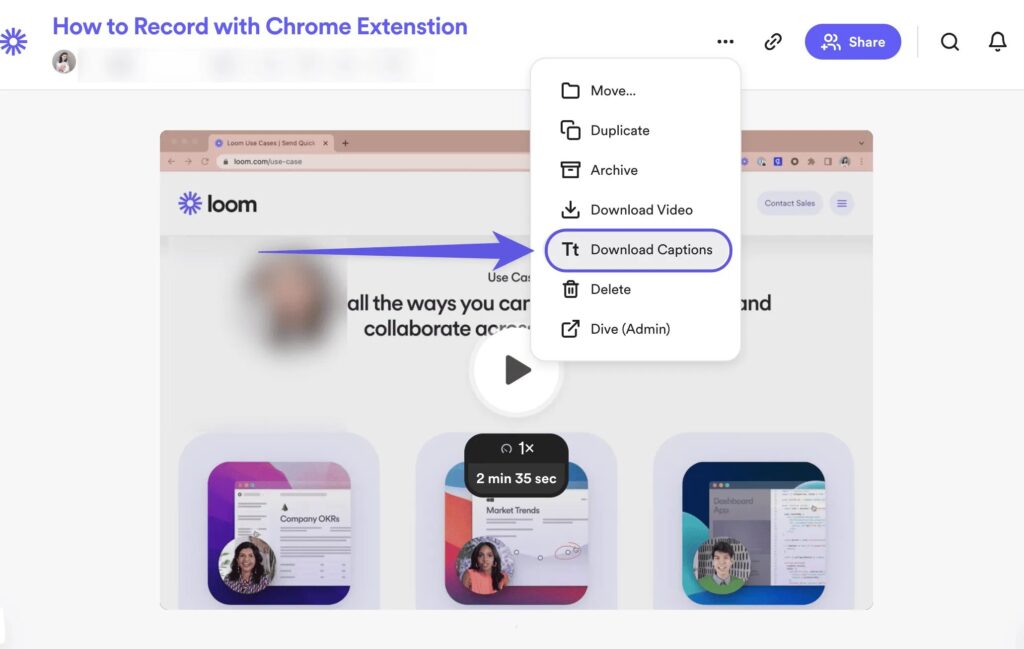
- Download the video file (MP4).
- Download the transcript as an SRT file (available in Business / Enterprise plans).
- Upload the MP4 and the SRT file to a third-party ai subtitle translation or dubbing service.
- Translate, dub, and lip-sync within the third-party platform.
- Re-download the final localized video.
This breaks the simplicity Loom is known for and adds cost and time. If your workflow requires this constant export / import, the simple answer to can Loom translate a video with AI for your use case is clearly no, requiring a separate tool. For more on the standards involved in high-quality localization, see this guide on AI dubbing quality assessment processes.
The Practical Solution: Moving Beyond Loom to Dedicated AI Video Translation
When the need shifts from internal communication to professional ai video localization, a dedicated platform built for the task is required. This is where tools like Vozo AI Video Translator step in to fill the entire workflow gap.
Vozo is built as an end-to-end localization solution with a claimed translation accuracy rate of 98.9%, positioning it to solve the precise limitations of Loom.
The Complete AI Video Translation Workflow
Vozo’s core competence is automating the full localization lifecycle:
- Input: Users upload a video or paste a URL.
- 1-Click Translation & Dubbing: The system instantly handles transcription, script translation (61+ core languages), and ai video dubbing.
- VoiceREAL™ Technology: This feature ensures the emotional tone, cadence, and unique traits of the original speaker’s voice are cloned and replicated in the translated audio, maintaining authenticity. Learn more about the competitive advantage this offers over traditional voice-over methods in RWS’s guide to AI dubbing in 2026.
- LipREAL™ Synchronization: Vozo utilizes its proprietary Vozo LipREAL™ technology to automatically match the speaker’s on-screen lip movements to the newly dubbed audio, preventing the distracting “dubbing effect.”
- Proofreading Editor & Locale Control: Paid plans include a proofreading editor and Locale Control to manually refine translations, ensuring cultural context and industry-specific jargon remain consistent.

Beyond Dubbing: Language and Format Support
For real ai video localization, volume and diversity matter. Vozo offers capabilities far exceeding Loom’s transcription focus:
- Subtitle Translation: The platform supports ai subtitle translation in over 160+ languages and dialects, catering to the widest possible global audience.
- Long-Form Content: Unlike basic tools, the Vozo Enterprise solution supports videos up to 2 hours (or more, according to some reports), making it suitable for full webinars, online courses, and long training modules.
- Customization: Users have access to over 300 different lifelike AI voices if they choose not to clone their own, as well as features for adjusting pitch and duration.
When Loom Is Enough—and When It Isn’t
For the modern SaaS buyer, the decision depends entirely on the video’s intended audience and purpose. It determines whether the answer to can Loom translate a video with AI is “partially” or “not at all.”
| Scenario | Loom is Enough | Dedicated AI Video Translator (e.g., Vozo) is Needed |
| Purpose | Internal team communication, async updates, brief bug reports. | Global marketing campaigns, monetized content, large-scale training courses, public-facing product demos. |
| Audience | Colleagues, internal stakeholders, small, single-language teams. | International customers, global sales prospects, multi-region employees, non-English speaking YouTube subscribers. |
| Localization Goal | Basic accessibility (captions), documentation automation. | Full voice authenticity, visual alignment (lip-sync), professional presentation, seamless video translation ai tool output. |
| Key Limitation | No ai video dubbing or new translated audio file. | Higher per-use cost but 100% automation of the entire localization pipeline. |
For internal, informal content where the speaker’s voice is the primary concern (the message), Loom’s free and paid AI features are superb. For any external-facing content where professionalism, fluency, and audience engagement are critical, the functionality provided by a video translation ai tool like Vozo becomes a necessity.
Practical Takeaway for SaaS Buyers
If your question is strictly, “can Loom translate a video with AI?,” the factual answer is that it only translates captions at the viewer level. This basic loom ai captions translation is insufficient for professional ai video localization.
To truly scale your video content across multiple languages, you need a 1-Click solution that handles transcription, ai video dubbing, and realistic lip-sync simultaneously. These three capabilities define a true ai video translator and represent the next step for any creator or enterprise ready to move beyond basic team communication and engage a global audience.
Conclusion: Making the Right Workflow Choice
Deciding whether Loom is right for your global video needs comes down to your objective. If you just need faster, clearer internal communication, Loom is the right SaaS tool. If you need your content to look and sound native in 61 different languages to penetrate new markets, you will quickly hit the limits of what can Loom translate a video with ai. For that advanced workflow, integrating a dedicated ai video translator designed for scale, like Vozo, becomes the necessary step to unlock true global reach.
For more information on the full capabilities of AI-driven localization.
