

Top 10 YouTube Keyword Best Practices 2025
Buyer’s Guide • YouTube Keyword Best Practices
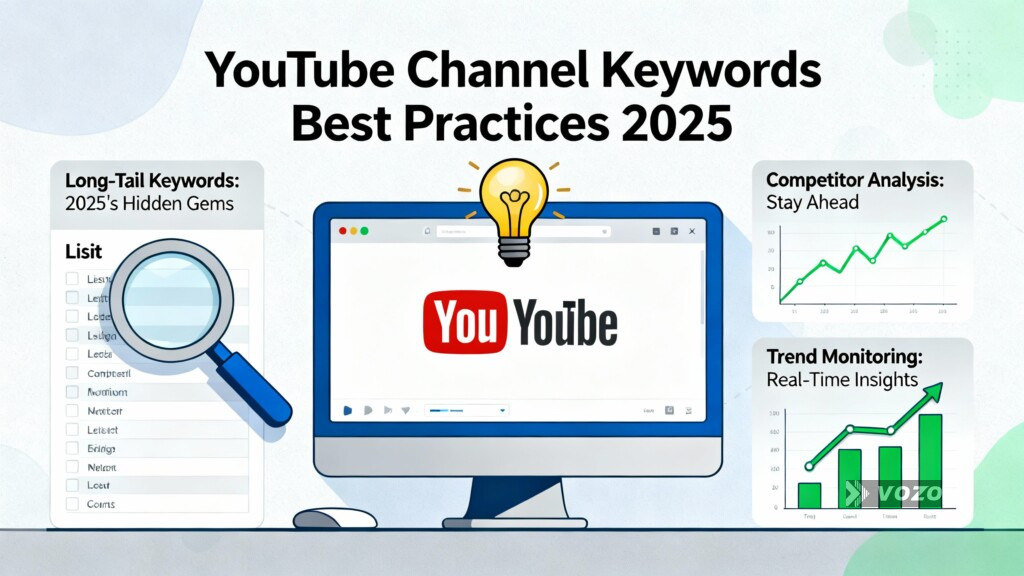
The 10 best keyword practices to increase discoverability and build sustainable channel growth on YouTube in 2025.
This list highlights the most effective keyword tactics and supporting tools that help creators get discovered and keep viewers watching. We compared approaches that influence search and recommendation signals, then prioritized practices that also drive viewer satisfaction, mobile performance, and long-term channel authority.
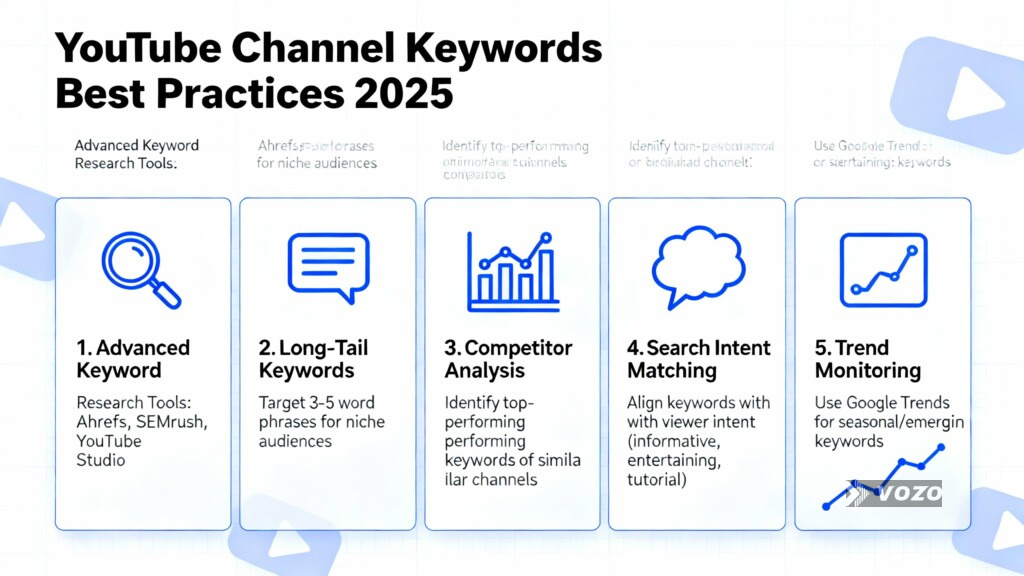
How We Selected These Tools and Practices
We evaluated tactics by the direct impact they have on discoverability, watch time, and subscriber growth, with emphasis on practicality for creators of varying experience.
- Algorithmic relevance: Does the practice influence search, suggested, or watch-time signals?
- Effectiveness: Can it drive measurable improvements in CTR, retention, or session time?
- Ease of implementation: Is it realistic for solo creators and small teams?
- Data-driven insights: Does it provide actionable metrics like volume, trends, or competition?
- Future-proofing: Is it aligned with Shorts, voice search, and semantic AI trends?
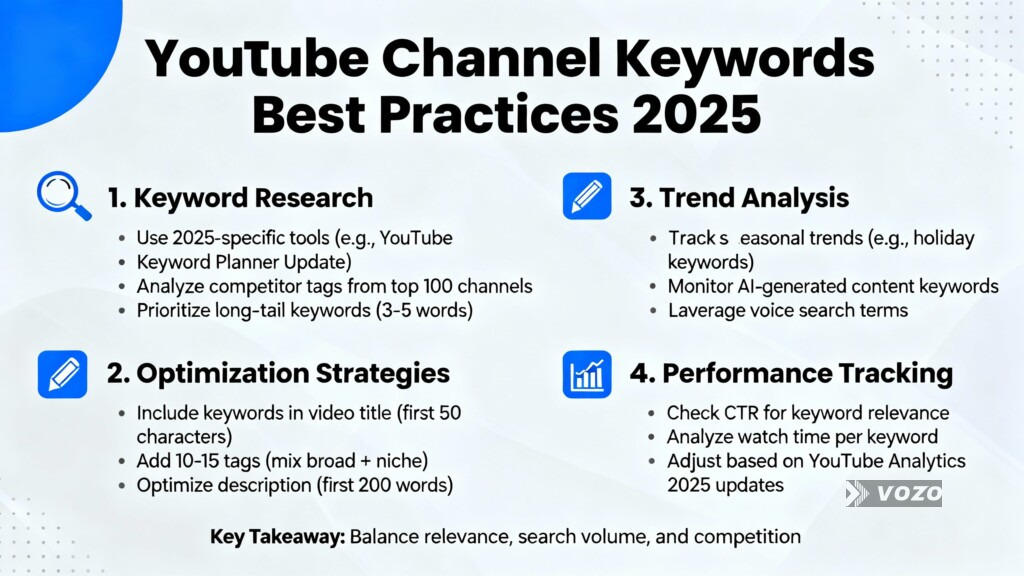
Quick Comparison of Top Picks
| Practice | Best for | Price tier | Key strengths |
|---|---|---|---|
| Advanced keyword research tools | Data-driven creators and competitors | Free to $100+/month | Volume, trends, competitor gaps |
| Strategic title placement | All creators | Free | Higher CTR, mobile visibility |
| Comprehensive descriptions | Tutorials and reviews | Free | Long-tail SEO, chapters, links |
| Strategic video tags | Creators wanting extra categorization | Free | Variation capture, related video support |
| Channel identity optimization | New and niche channels | Free | Channel-level discoverability |
| Closed captions and subtitles | Educational and global audiences | Free | Full-text indexing and accessibility |
| Voice search optimization | How-to and Q&A creators | Free | Conversational, long-tail intent |
| Multi-format keyword use | Creators using Shorts, Live, Posts | Free | Cross-surface discovery |
| Competitor analysis | Competitive niches | Free to paid | Gap discovery and market proof |
| Channel authority building | Sustainable growth seekers | Free | Broader ranking and suggested video gains |
Advanced Keyword Research with Integrated Tool Suites
Editor’s pick
Integrated keyword tools are the foundation for finding high-impact terms that match viewer intent and algorithm preferences.
Pros
- Identifies topics with proven demand so you can plan content confidently.
- Exposes long-tail opportunities that are easier to rank and convert.
- Provides competitor signals and gap analysis to inform unique angles.
Cons
- Premium features often require subscriptions, which can add cost for small creators.
- There is a learning curve to interpret volume and difficulty correctly.
Bottom line
Prioritize building a research workflow before scripting. Use tools like TubeBuddy, VidIQ, Ahrefs, and Semrush to validate demand, then pick a primary keyword plus clustered variations for each video.
Strategic Keyword Placement in Video Titles
Put the primary keyword near the start of a concise, compelling title to lift CTR and relevance immediately.
Pros
- Direct CTR improvements that help early ranking and suggestion performance.
- Better mobile readability when titles are within 40 to 70 characters.
- Easy to test and iterate with modest effort.
Cons
- Over-optimizing can slip into clickbait and harm retention.
- Changing titles too often can confuse early viewers and metrics.
Bottom line
Write for humans, lead with the keyword, and keep titles concise so they display well on mobile. Use numbers, power words, and years sparingly to boost clarity and freshness.
Comprehensive and Keyword-Rich Video Descriptions
A detailed, natural description gives YouTube more context and helps you rank for long-tail queries.
Pros
- Expands semantic footprint so videos rank for multiple related queries.
- Chapters and links improve user experience and session time.
- Works as a mini-article to support discovery and retention.
Cons
- Writing 200 to 300+ words per video takes time and consistency.
- Poorly written or keyword-stuffed descriptions reduce trust and clarity.
Bottom line
Treat descriptions like a companion article: place the primary keyword and hook in the first lines, add timestamps, links, and a clear CTA to improve both discovery and viewer satisfaction.
Strategic Use of Video Tags
Use a small set of highly relevant tags to help categorization and capture keyword variations.
Pros
- Helps YouTube disambiguate topics and surface related content.
- Captures alternate phrasings and common misspellings when relevant.
- Quick to implement with simple tag lists.
Cons
- Lower impact than titles and descriptions in 2025.
- Irrelevant tags can miscategorize content and hurt performance.
Bottom line
Use 5 to 10 precise tags, put the primary keyword first, and avoid long lists of loosely related terms. Quality beats quantity for tags.
Optimizing Channel Name, Handle, and About Section
A keyword-aligned channel identity builds thematic consistency and signals authority over time.
Pros
- Signals a focused niche to both users and the algorithm.
- A strong About section helps with channel-level search and recommendations.
- Consistent branding increases conversion from visitors to subscribers.
Cons
- Changing names or handles later can disrupt branding and discoverability.
- Variety channels may struggle to pick consistent keywords for identity.
Bottom line
Make your niche and audience obvious in your About section, and consider keyword-aligned branding only if it fits your long-term direction.
Leveraging Closed Captions and Subtitles
Accurate captions improve accessibility and give YouTube a searchable transcript for keyword context.
Pros
- Creates a complete text layer for indexing specific spoken phrases.
- Improves accessibility and opens international audience opportunities.
- Scripting keywords into early speech increases indexable relevance.
Cons
- Editing captions accurately takes time and attention to detail.
- Auto-captions can misinterpret jargon, requiring manual fixes.
Bottom line
Correct auto-captions or upload your own to ensure YouTube can index your spoken keywords. Add multilingual subtitles where it matches your audience strategy.
Voice Search Optimization with Natural Language Keywords
Use question-based, conversational keywords to match how people search by voice.
Pros
- Captures conversational queries with clear intent that often convert better.
- Encourages clear structuring of content and early answers in videos.
Cons
- Requires more research for long-tail questions and natural phrasing.
- Forces a shift away from short, generic keywords which may reduce raw volume.
Bottom line
Build titles and descriptions around real questions, answer them clearly early in the video, and add FAQ-style content in descriptions or pinned comments to capture voice traffic.
Multi-Format Content Strategy and Keyword Integration
Applying keywords across Shorts, livestreams, and community posts expands reach across YouTube surfaces.
Pros
- Expands visibility across Shorts shelf, Live pages, and the Home feed.
- Keeps audiences engaged by moving them between formats and videos.
- Reinforces channel themes through repeated keyword signals.
Cons
- Increases production complexity and planning requirements.
- Shorts metadata is less direct for search compared with long-form content.
Bottom line
Use consistent keywords across formats while adapting phrasing to the length and intent of each format. Link Shorts and Live archives back to full videos to lift session time.
Competitor Keyword Analysis and Content Gap Identification
Studying competitor metadata and gaps helps you find proven demand and underserved topics you can own.
Pros
- Reveals topics with existing audience demand you can improve upon.
- Informs format and angle choices based on real-performing examples.
Cons
- Time-intensive when done thoroughly; easy to misinterpret causation for correlation.
- Over-reliance on competitor copying reduces originality and differentiation.
Bottom line
Use competitor research to identify gaps and inspiration, not to clone. Look for underserved questions, stale coverage, and opportunities to add a fresher or deeper take.
Building Channel Authority Through Thematic Consistency
Consistent, keyword-aligned content in a defined niche builds authority and improves discoverability across your entire library.
Pros
- Compounding growth as the algorithm better understands your niche and audience.
- Improves rankings across related keywords and suggested placements.
- Builds loyal subscribers and predictable view patterns.
Cons
- Requires patience and a sustained publishing plan.
- May feel limiting for creators who want to cover diverse topics.
Bottom line
Thematic consistency is a long-term multiplier. Use keyword clusters, playlists, and series formats to signal focus and keep viewers moving deeper into your channel.
Buyer’s Guide: Choosing Your YouTube Keyword Strategy in 2025
Use this checklist to pick which practices to adopt first based on your goals, resources, and channel stage.
- Understand your niche and audience: Define your niche before heavy research and use the language your audience types and speaks.
- Prioritize algorithmic signals: Focus on viewer satisfaction metrics like watch time, retention, CTR, and engagement. Optimize for mobile first.
- Invest in research tools: Start with free signals like YouTube autocomplete and Google Keyword Planner, then scale to paid suites for gap analysis.
- Embrace holistic keyword use: Apply keywords across titles, descriptions, About section, Shorts, Live, and captions.
- Favor long-tail and voice-style queries: They usually have clearer intent, lower competition, and better conversion.
- Analyze and adapt continuously: Use YouTube Analytics and A/B tests to refine keywords and metadata every quarter.
- Prioritize quality over stuffing: Keywords earn you clicks but value and retention keep you recommended.
Buying FAQs for YouTube Keyword Best Practices
Do keywords still matter on YouTube in 2025?
Yes. Keywords remain foundational because they help YouTube categorize and rank content, but they work best when paired with strong viewer satisfaction signals like retention and engagement.
What is the most important place to put keywords on YouTube?
The video title is most critical for immediate relevance and CTR, followed by the first lines of the description. Captions and channel About text are important for broader contextual indexing.
How long should my titles and descriptions be?
Titles should generally be 40 to 70 characters for good visibility across devices. Descriptions should aim for at least 200 to 300 words to provide context and long-tail coverage.
Are video tags still important?
Tags are less impactful than titles and descriptions in 2025 but still useful for disambiguation and related video signals. Use 5 to 10 precise tags rather than long lists.
How often should I update my keyword strategy?
Review quarterly or whenever analytics show meaningful shifts in traffic or viewer behavior. Use A/B tests and competitor monitoring to course correct faster when needed.
Can I copy competitors’ keywords directly?
Use competitor data for inspiration and gap identification, but do not copy blindly. Aim to deliver a better angle or a fresher update rather than cloning metadata.
