

As 10 melhores práticas de palavras-chave do YouTube em 2025
Guia do comprador - Melhores práticas de palavras-chave do YouTube
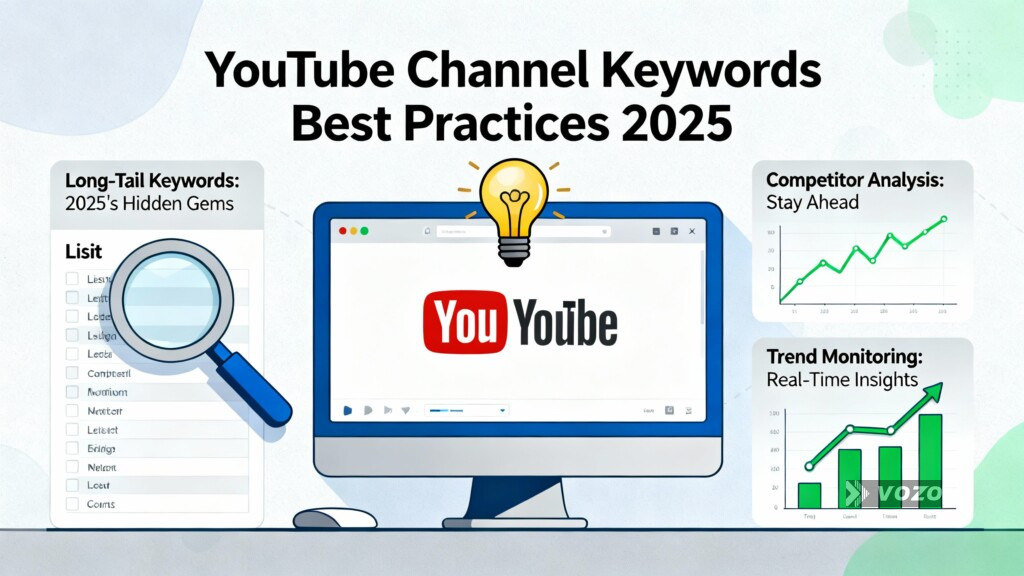
As 10 melhores práticas de palavras-chave para aumentar a capacidade de descoberta e criar um crescimento sustentável do canal no YouTube em 2025.
Esta lista destaca as tácticas de palavras-chave mais eficazes e as ferramentas de apoio que ajudam os criadores a serem descobertos e a manter os espectadores a assistir. Comparámos as abordagens que influenciam os sinais de pesquisa e recomendação e, em seguida, demos prioridade às práticas que também contribuem para a satisfação dos espectadores, o desempenho móvel e a autoridade do canal a longo prazo.
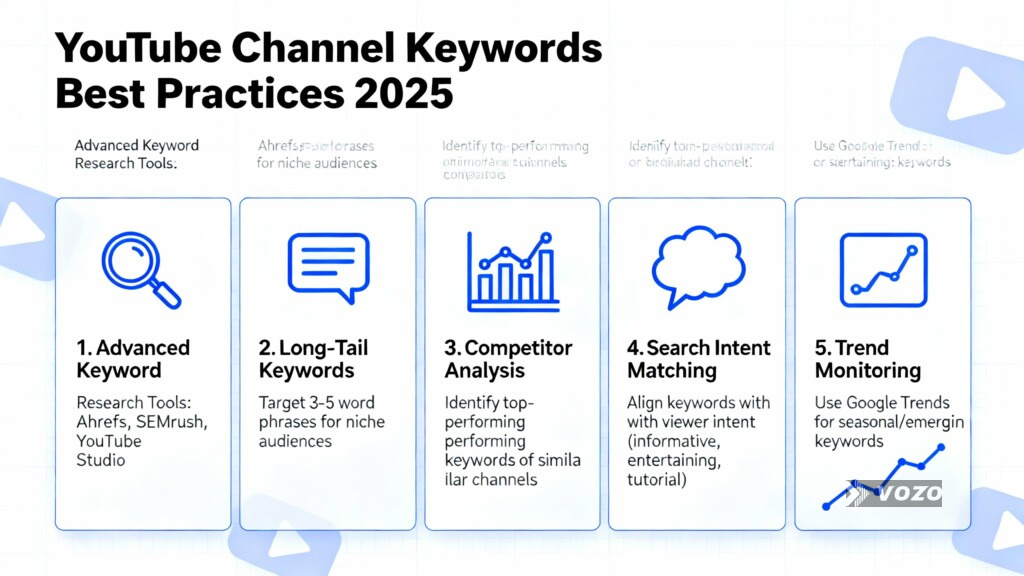
Como selecionámos estas ferramentas e práticas
Avaliámos as tácticas pelo impacto direto que têm na capacidade de descoberta, no tempo de visualização e no aumento de subscritores, com ênfase na praticabilidade para criadores com diferentes experiências.
- Relevância algorítmica: A prática influencia os sinais de pesquisa, sugestão ou tempo de observação?
- Eficácia: Pode conduzir a melhorias mensuráveis na CTR, retenção ou tempo de sessão?
- Facilidade de aplicação: É realista para criadores a solo e pequenas equipas?
- Informações baseadas em dados: Fornece métricas acionáveis como volume, tendências ou concorrência?
- Preparar o futuro: Está alinhado com as tendências de Shorts, pesquisa por voz e IA semântica?
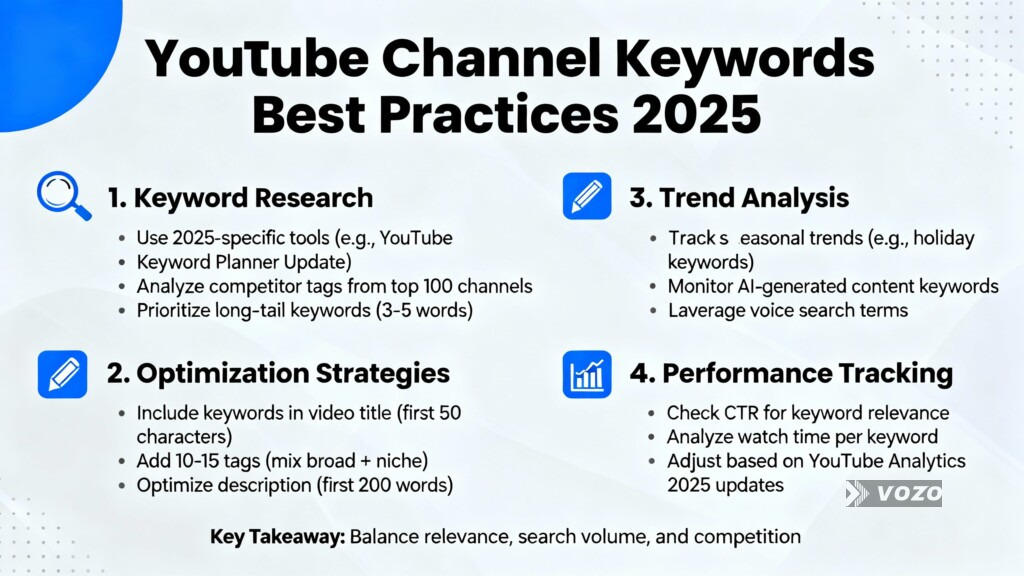
Comparação rápida das melhores escolhas
| Prática | Melhor para | Escalão de preços | Principais pontos fortes |
|---|---|---|---|
| Ferramentas avançadas de pesquisa de palavras-chave | Criadores e concorrentes orientados para os dados | Gratuito para $100+/mês | Volume, tendências, lacunas da concorrência |
| Colocação estratégica de títulos | Todos os criadores | Grátis | Maior CTR, visibilidade móvel |
| Descrições exaustivas | Tutoriais e análises | Grátis | SEO de cauda longa, capítulos, ligações |
| Etiquetas de vídeo estratégicas | Criadores que pretendem uma categorização adicional | Grátis | Captura de variações, suporte de vídeo relacionado |
| Otimização da identidade do canal | Canais novos e de nicho | Grátis | Detetabilidade ao nível do canal |
| Legendas e legendas ocultas | Públicos educativos e mundiais | Grátis | Indexação de texto integral e acessibilidade |
| Otimização da pesquisa por voz | Criadores de instruções e de perguntas e respostas | Grátis | Conversação, intenção de cauda longa |
| Utilização de palavras-chave em vários formatos | Criadores que utilizam Shorts, Live, Posts | Grátis | Descoberta transversal à superfície |
| Análise da concorrência | Nichos competitivos | Gratuito a pago | Descoberta de lacunas e prova de mercado |
| Criação de autoridade no canal | Quem procura um crescimento sustentável | Grátis | Classificação mais alargada e ganhos com vídeos sugeridos |
Pesquisa avançada de palavras-chave com conjuntos de ferramentas integradas
Escolha do editor
As ferramentas de palavras-chave integradas são a base para encontrar termos de grande impacto que correspondam à intenção do espetador e às preferências do algoritmo.
Prós
- Identifica tópicos com procura comprovada para que possa planear conteúdos com confiança.
- Expõe oportunidades de cauda longa que são mais fáceis de classificar e converter.
- Fornece sinais da concorrência e análise de lacunas para informar ângulos únicos.
Contras
- As funcionalidades premium requerem frequentemente subscrições, o que pode aumentar os custos para os pequenos criadores.
- Existe uma curva de aprendizagem para interpretar corretamente o volume e a dificuldade.
Conclusão
Dê prioridade à criação de um fluxo de trabalho de pesquisa antes de criar o script. Use ferramentas como TubeBuddy, VidIQ, Ahrefs e Semrush para validar a demanda e, em seguida, escolha uma palavra-chave principal e variações agrupadas para cada vídeo.
Colocação estratégica de palavras-chave nos títulos dos vídeos
Coloque a palavra-chave principal no início de um título conciso e convincente para aumentar imediatamente a CTR e a relevância.
Prós
- Melhorias diretas de CTR que ajudam a classificação inicial e o desempenho das sugestões.
- Melhor legibilidade no telemóvel quando os títulos têm entre 40 e 70 caracteres.
- Fácil de testar e iterar com um esforço modesto.
Contras
- Uma otimização excessiva pode cair no clickbait e prejudicar a retenção.
- Mudar os títulos com demasiada frequência pode confundir os primeiros espectadores e as métricas.
Conclusão
Escreva para humanos, comece com a palavra-chave e mantenha os títulos concisos para que sejam bem apresentados em dispositivos móveis. Utilize números, palavras poderosas e anos com moderação para aumentar a clareza e a atualidade.
Descrições de vídeo abrangentes e ricas em palavras-chave
Uma descrição detalhada e natural dá mais contexto ao YouTube e ajuda-o a classificar-se para consultas de cauda longa.
Prós
- Expande a pegada semântica para que os vídeos sejam classificados para várias consultas relacionadas.
- Os capítulos e as ligações melhoram a experiência do utilizador e o tempo de sessão.
- Funciona como um mini-artigo para apoiar a descoberta e a retenção.
Contras
- Escrever 200 a 300 palavras ou mais por vídeo requer tempo e consistência.
- Descrições mal escritas ou cheias de palavras-chave reduzem a confiança e a clareza.
Conclusão
Trate as descrições como um artigo complementar: coloque a palavra-chave principal e o gancho nas primeiras linhas, adicione carimbos de data/hora, hiperligações e uma CTA clara para melhorar a descoberta e a satisfação do espetador.
Utilização estratégica de etiquetas de vídeo
Utilize um pequeno conjunto de etiquetas altamente relevantes para ajudar a categorizar e captar variações de palavras-chave.
Prós
- Ajuda o YouTube a desambiguar os tópicos e a fazer aparecer conteúdos relacionados.
- Captura frases alternativas e erros ortográficos comuns, quando relevante.
- Rápida implementação com listas de etiquetas simples.
Contras
- Impacto inferior ao dos títulos e descrições em 2025.
- As etiquetas irrelevantes podem desvirtuar o conteúdo e prejudicar o desempenho.
Conclusão
Utilize 5 a 10 etiquetas precisas, coloque a palavra-chave principal em primeiro lugar e evite longas listas de termos pouco relacionados. A qualidade é melhor do que a quantidade de etiquetas.
Otimizar o nome do canal, o identificador e a secção Sobre
Uma identidade de canal alinhada com palavras-chave cria consistência temática e sinaliza autoridade ao longo do tempo.
Prós
- Sinaliza um nicho específico tanto para os utilizadores como para o algoritmo.
- Uma forte secção Sobre ajuda na pesquisa e nas recomendações ao nível do canal.
- Uma marca consistente aumenta a conversão de visitantes em subscritores.
Contras
- A alteração posterior de nomes ou identificadores pode perturbar a marca e a capacidade de descoberta.
- Os canais de variedades podem ter dificuldade em escolher palavras-chave coerentes para a identidade.
Conclusão
Torne o seu nicho e público-alvo óbvios na secção "Sobre" e considere a possibilidade de criar uma marca alinhada com palavras-chave apenas se tal se adequar à sua orientação a longo prazo.
Utilização de legendas ocultas e legendas
As legendas exactas melhoram a acessibilidade e fornecem ao YouTube uma transcrição pesquisável para o contexto de palavras-chave.
Prós
- Cria uma camada de texto completa para indexar frases faladas específicas.
- Melhora a acessibilidade e abre oportunidades para o público internacional.
- A introdução de palavras-chave no discurso inicial aumenta a relevância indexável.
Contras
- Editar as legendas com precisão requer tempo e atenção aos pormenores.
- As legendas automáticas podem interpretar mal o jargão, exigindo correcções manuais.
Conclusão
Corrija as legendas automáticas ou carregue as suas próprias legendas para garantir que o YouTube consegue indexar as suas palavras-chave faladas. Adicione legendas multilingues quando corresponder à sua estratégia de público-alvo.
Otimização da pesquisa por voz com palavras-chave de linguagem natural
Utilize palavras-chave baseadas em perguntas e em conversação para corresponder à forma como as pessoas pesquisam por voz.
Prós
- Captura consultas de conversação com intenções claras que, muitas vezes, convertem melhor.
- Incentiva uma estruturação clara dos conteúdos e respostas rápidas nos vídeos.
Contras
- Requer mais pesquisa para perguntas de cauda longa e frases naturais.
- Obriga a um afastamento das palavras-chave curtas e genéricas, o que pode reduzir o volume bruto.
Conclusão
Crie títulos e descrições em torno de perguntas reais, responda-lhes claramente no início do vídeo e adicione conteúdo do tipo FAQ nas descrições ou nos comentários afixados para captar tráfego de voz.
Estratégia de conteúdo multiformato e integração de palavras-chave
A aplicação de palavras-chave em curtas, transmissões em direto e publicações da comunidade aumenta o alcance das superfícies do YouTube.
Prós
- Expande a visibilidade na prateleira de Shorts, nas páginas em direto e no feed da Página inicial.
- Mantém o público envolvido, deslocando-o entre formatos e vídeos.
- Reforça os temas do canal através de sinais repetidos de palavras-chave.
Contras
- Aumenta a complexidade da produção e os requisitos de planeamento.
- Os metadados curtos são menos diretos para a pesquisa em comparação com os conteúdos longos.
Conclusão
Utilize palavras-chave consistentes em todos os formatos, adaptando as frases à duração e intenção de cada formato. Ligue os arquivos curtos e em direto aos vídeos completos para aumentar o tempo da sessão.
Análise de palavras-chave da concorrência e identificação de lacunas de conteúdo
Estudar os metadados e as lacunas da concorrência ajuda-o a encontrar procura comprovada e tópicos mal servidos que pode controlar.
Prós
- Revela tópicos com procura de audiência existente que pode melhorar.
- Informa sobre as escolhas de formato e ângulo com base em exemplos reais de desempenho.
Contras
- Demora muito tempo quando é feito de forma exaustiva; é fácil interpretar mal a causalidade como correlação.
- A dependência excessiva da cópia dos concorrentes reduz a originalidade e a diferenciação.
Conclusão
Utilize a pesquisa da concorrência para identificar lacunas e inspiração, não para clonar. Procure questões mal servidas, cobertura obsoleta e oportunidades para acrescentar uma visão mais fresca ou mais profunda.
Criar autoridade de canal através da consistência temática
Conteúdos consistentes e alinhados com palavras-chave num nicho definido criam autoridade e melhoram a capacidade de descoberta em toda a sua biblioteca.
Prós
- Crescimento composto à medida que o algoritmo compreende melhor o seu nicho e o seu público.
- Melhora as classificações através de palavras-chave relacionadas e colocações sugeridas.
- Cria subscritores fiéis e padrões de visualização previsíveis.
Contras
- Requer paciência e um plano de publicação sustentado.
- Pode parecer limitativo para os criadores que pretendem abordar diversos temas.
Conclusão
A consistência temática é um multiplicador a longo prazo. Utilize grupos de palavras-chave, listas de reprodução e formatos de séries para sinalizar o foco e manter os espectadores mais atentos ao seu canal.
Guia do comprador: Escolher a sua estratégia de palavras-chave do YouTube em 2025
Utilize esta lista de verificação para escolher as práticas a adotar em primeiro lugar com base nos seus objectivos, recursos e fase do canal.
- Compreender o seu nicho e o seu público: Defina o seu nicho antes de fazer uma pesquisa exaustiva e utilize a linguagem que o seu público digita e fala.
- Dar prioridade aos sinais algorítmicos: Concentre-se nas métricas de satisfação dos espectadores, como o tempo de visualização, a retenção, a CTR e o envolvimento. Optimize primeiro para dispositivos móveis.
- Investir em ferramentas de investigação: Comece com sinais gratuitos como o preenchimento automático do YouTube e o Planeador de palavras-chave do Google e, em seguida, passe para conjuntos pagos para análise de lacunas.
- Adotar uma utilização holística das palavras-chave: Aplique palavras-chave nos títulos, descrições, secção Sobre, Shorts, Live e legendas.
- Favorecer as consultas de cauda longa e de voz: Normalmente, têm uma intenção mais clara, menor concorrência e melhor conversão.
- Analisar e adaptar-se continuamente: Utilize o YouTube Analytics e os testes A/B para aperfeiçoar as palavras-chave e os metadados a cada trimestre.
- Dar prioridade à qualidade em detrimento do recheio: As palavras-chave dão-lhe cliques, mas o valor e a retenção mantêm-no recomendado.
Comprar FAQs para as melhores práticas de palavras-chave do YouTube
As palavras-chave ainda são importantes no YouTube em 2025?
Sim. As palavras-chave continuam a ser fundamentais porque ajudam o YouTube a categorizar e a classificar o conteúdo, mas funcionam melhor quando associadas a fortes sinais de satisfação dos espectadores, como a retenção e o envolvimento.
Qual é o sítio mais importante para colocar palavras-chave no YouTube?
O título do vídeo é mais importante para a relevância imediata e a CTR, seguido das primeiras linhas da descrição. As legendas e o texto sobre o canal são importantes para uma indexação contextual mais alargada.
Qual deve ser o tamanho dos meus títulos e descrições?
Os títulos devem ter geralmente 40 a 70 caracteres para uma boa visibilidade em todos os dispositivos. As descrições devem ter como objetivo, pelo menos, 200 a 300 palavras para fornecer contexto e cobertura de cauda longa.
As etiquetas de vídeo ainda são importantes?
As etiquetas têm menos impacto do que os títulos e as descrições em 2025, mas continuam a ser úteis para desambiguação e sinais de vídeo relacionados. Utilize 5 a 10 etiquetas precisas em vez de longas listas.
Com que frequência devo atualizar a minha estratégia de palavras-chave?
Reveja trimestralmente ou sempre que a análise mostrar mudanças significativas no tráfego ou no comportamento dos espectadores. Utilize os testes A/B e a monitorização da concorrência para corrigir o rumo mais rapidamente quando necessário.
Posso copiar diretamente as palavras-chave dos concorrentes?
Utilize os dados da concorrência para se inspirar e identificar lacunas, mas não copie cegamente. Procure apresentar um ângulo melhor ou uma atualização mais fresca em vez de clonar metadados.
