

Sous-titres allemands pour les documentaires : Pas à pas
Obtenir des sous-titres allemands pour les documentaires est l'un des moyens les plus rapides d'élargir la distribution, d'améliorer l'accessibilité et de faire en sorte que votre film soit perçu par les spectateurs germanophones comme une œuvre originale. Je vous montrerai comment planifier, générer, peaufiner et livrer des sous-titres allemands. documentaire sous-titré en allemand sans bouleverser votre emploi du temps ou votre budget.
Qu'est-ce qu'un sous-titrage en allemand pour un documentaire ?
Les sous-titres allemands sont des lignes de dialogue traduites codées dans le temps (et parfois des étiquettes de locuteurs et des indices sonores) qui apparaissent à l'écran en synchronisation avec l'audio. Ils sont généralement livrés sous la forme d'un fichier de sous-titres tel que :
- SRT (sous-titre SubRip): l'option la plus largement compatible
- VTT (Web Video Text Tracks): commun pour les lecteurs web
- Autres formats que vous pouvez rencontrer dans les flux de travail professionnels : CCN et XML
Les sous-titres peuvent être sous-titres doux (un fichier séparé que les spectateurs peuvent activer ou désactiver sur des plateformes telles que YouTube et Vimeo) ou sous-titres codés en dur (gravés dans la vidéo afin qu'ils soient toujours visibles).
Conditions préalables et outils à préparer
Avant de vous lancer dans la traduction de sous-titres de documentaires en allemand, rassemblez ces éléments essentiels. Cette démarche permet de gagner du temps par la suite, notamment en matière de révision et de repérage (minutage).
- Fichier vidéo original
- Formats : MP4, MOV, AVI, MKV
- De préférence HD ou 4K (SD est généralement pris en charge)
- Un son clair est essentiel pour une transcription précise (en particulier avec l'IA)
- Relevé de notes original (facultatif mais recommandé)
- Formats : TXT, DOCX, ou un SRT existant
- Une transcription codée réduit le coût des services sociaux et améliore la précision de l'IA.
- Connexion Internet
- Haut débit stable, idéalement au moins 10 Mbps en amont pour les fichiers volumineux
- Outils d'édition (facultatif)
- Si votre pipeline de post-production nécessite des pistes de sous-titres dans une timeline NLE, les exportations SRT et VTT de Vozo s'intègrent parfaitement dans Adobe Premiere Pro, DaVinci Resolve, Final Cut Pro et AVID Media Composer. Adobe Premiere Pro, DaVinci Resolve, Final Cut Pro, AVID Media Composer.
- Outils d'édition de sous-titres
- L'éditeur de relecture intégré de Vozo couvre les corrections de synchronisation, les éditions de lignes et les corrections terminologiques directement à l'intérieur de la plateforme : aucun éditeur de sous-titres séparé n'est nécessaire pour la plupart des flux de travail. Pour un travail granulaire de synchronisation hors ligne, des outils externes tels que Subtitle Edit ou Aegisub restent compatibles avec les fichiers SRT et VTT exportés par Vozo.
- Budget et mode de paiement
- Comparé aux services humains professionnels (généralement de 6 à 26 livres sterling par minute), le flux de travail de Vozo basé sur l'IA réduit considérablement le coût des premières ébauches tout en gardant le temps de révision humaine concentré sur les scènes à forte charge de jugement.
- Profil du public cible et contexte culturel
- Le public général, les universitaires et les jeunes modifient le ton et les choix terminologiques.
- Tenir compte des nuances régionales le cas échéant (suisse allemand vs autrichien allemand vs Allemagne)
Pas à pas : Sous-titres allemands pour votre documentaire
Flux de travail étape par étape
Comprendre pourquoi les sous-titres allemands sont importants pour les documentaires
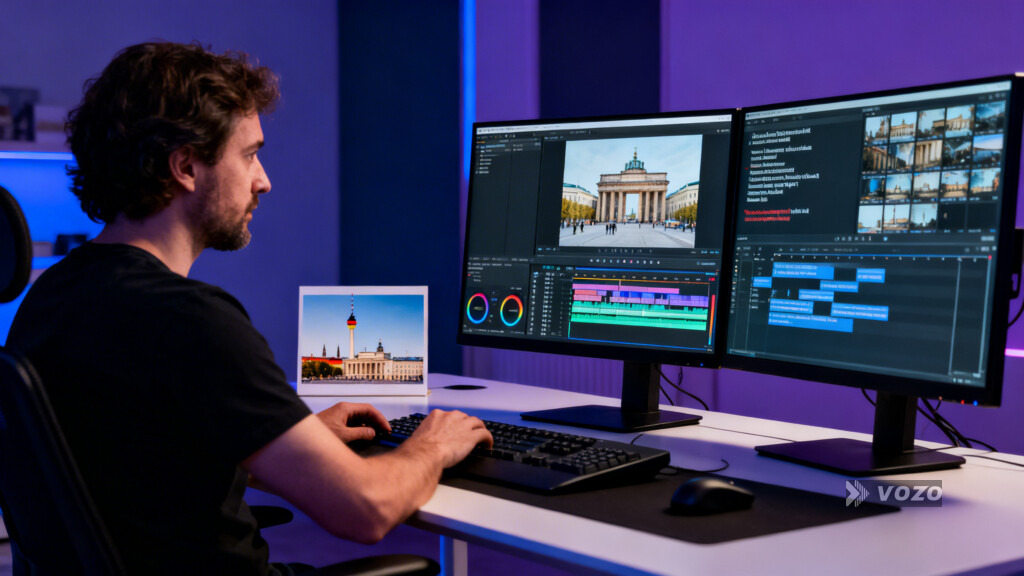
L'Allemagne est la plus grande économie d'Europe et un marché majeur pour la distribution de documentaires. La localisation fait donc souvent la différence entre une sortie de niche et un véritable tirage international.
Raisons principales documentaire sous-titré en allemand valent la peine d'être bien faites :
- Élargissement de l'audience : Les sous-titres permettent généralement d'élargir la portée 25 à 30% en moyenne, y compris les téléspectateurs qui préfèrent les sous-titres et les téléspectateurs malentendants.
- Un meilleur engagement : Une localisation allemande de qualité améliore la compréhension et le lien émotionnel, en particulier lorsque les sujets sont complexes (histoire, science, politique).
- Respect de l'accessibilité : Les sous-titres répondent aux exigences d'accessibilité qui s'appliquent dans de nombreux contextes européens.
- Disponibilité de la distribution : Les sous-titres allemands facilitent la diffusion auprès des radiodiffuseurs publics allemands tels que ARD et ZDF, des catalogues de diffusion en continu tels que Prime Video DE, et des festivals de cinéma.
- La précision protège l'intention : Les documentaires comportent souvent des formulations prudentes, des citations d'experts et des affirmations sensibles. Les erreurs de traduction peuvent entraîner des interprétations erronées.
- Avantages pour le référencement : Les sous-titres en allemand peuvent améliorer la visibilité sur des plateformes telles que YouTube, car votre contenu devient consultable en allemand.
Conseil d'expert : Si votre documentaire s'adresse à une région germanophone spécifique, tenez compte des dialectes et des tournures de phrases locales dès le début (par exemple, le vocabulaire de l'allemand autrichien présente des différences minimes mais perceptibles).
Estimation du temps : 1 à 2 heures pour la planification, la définition du public et la détermination de ce qui est bon.
Choisir la meilleure méthode pour la création de sous-titres allemands
Il y a trois méthodes principales pour obtenir des sous-titres en allemand pour votre documentaire :
- Services de sous-titrage professionnels (contrôle et assurance qualité de haut niveau)
- Traducteurs et sous-titreurs allemands indépendants (flexibles, souvent rentables)
- Outils de sous-titrage pilotés par l'IA (premières ébauches rapides et économiques)
Votre choix doit être guidé par :
- Budget
- Précision requise (en particulier pour les genres techniques, historiques ou sensibles)
- Délai d'exécution
- Nécessité d'ajouts tels que SDH, formatage, sous-titres gravés ou diffusion sur une plateforme spécifique
Conseil de sécurité : Toujours sauvegarder votre fichier vidéo original avant de le télécharger ou de l'envoyer.
Estimation du temps : 2 à 4 heures pour comparer les options et confirmer les résultats.
Option A (précision maximale) : Utiliser des services professionnels de sous-titrage en allemand
Les prestataires professionnels attribuent généralement linguistes de langue maternelle allemande qui se spécialisent dans le sous-titrage, et pas seulement dans la traduction. Les meilleurs services sont les suivants :
- Transcription (si nécessaire)
- Traduction
- Spotting (timing)
- Contrôle de qualité, souvent par un second linguiste
- Sortie en plusieurs formats (SRT, VTT, SCC, XML)
Les fournisseurs connus de sous-titrage en allemand sont les suivants HappyScribe et Matinee.co.uk. D'autres services existent également, mais privilégiez ceux qui disposent d'une expérience documentaire et d'une assurance qualité claire.
Délais et coûts :
- Le délai d'exécution peut être 12 à 24 heures pour les projets standard, avec des options d'urgence.
- La tarification se fait généralement à la minute, en général De 6 à 26 £ par minute, souvent avec des frais minimaux (par exemple £60).
- Les coûts varient en fonction de la qualité audio, de la complexité et des exigences particulières telles que SDH (sous-titres pour sourds et malentendants).
Conseil d'expert : Demander un Exemple de traduction d'un court segment avant de s'engager dans le documentaire complet.
Estimation du temps : 1 à 3 jours pour le devis, la sélection et la livraison initiale.
Option B (équilibrée) : Engager un sous-titreur allemand indépendant
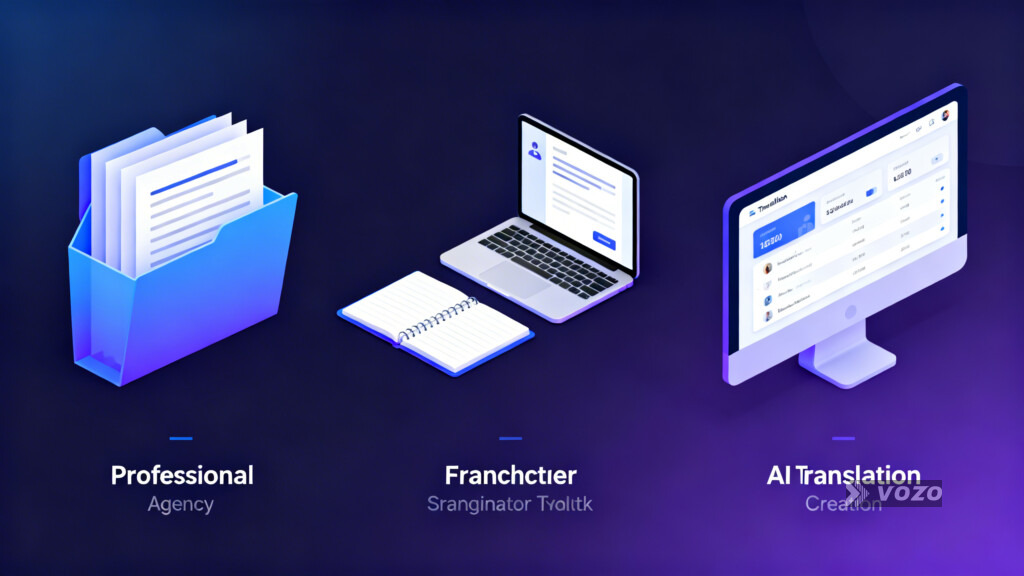
Les free-lances peuvent constituer une excellente solution intermédiaire : communication directe, décisions terminologiques sur mesure et coûts souvent inférieurs à ceux des agences.
Où trouver des sous-titreurs allemands qualifiés :
- Freelancer.com
- Upwork
Comment pratiquer le vetting de manière appropriée :
- Examiner le portfolio et les échantillons documentaires antérieurs
- Vérifier les avis et la fiabilité
- Demander un court métrage test de traduction rémunéré (plus réaliste que les échantillons non rémunérés)
Modèles de tarification habituels :
- Par minute de vidéo : environ 6,5 € par minute pour la traduction et 2,5 € par minute pour le contrôle de la qualité (CQ)
- Par mot : environ $0,10 à $0,14 par mot
- La relecture peut être de l'ordre de 0,06 € par mot
Important : Se mettre d'accord sur les produits à livrer (SRT ou VTT), les délais, les cycles de révision et la question de savoir si le repérage est inclus.
Conseil d'expert : Pour les documentaires à fort enjeu, envisagez de faire appel à deux free-lances : l'un pour la traduction, l'autre pour la révision et la relecture indépendantes.
Estimation du temps : 3 à 7 jours pour la recherche, le contrôle et la livraison.
Option C (la plus rapide) : Utiliser des outils d'IA, puis procéder à une révision humaine
Le sous-titrage par IA utilise la synthèse vocale et la traduction automatique pour produire un fichier de sous-titres chronométré rapidement, souvent en quelques minutes. Cela peut être idéal pour les calendriers serrés, les coupes précoces ou les contraintes budgétaires, mais les documentaires ont toujours besoin d'une révision humaine pour les nuances et la terminologie.
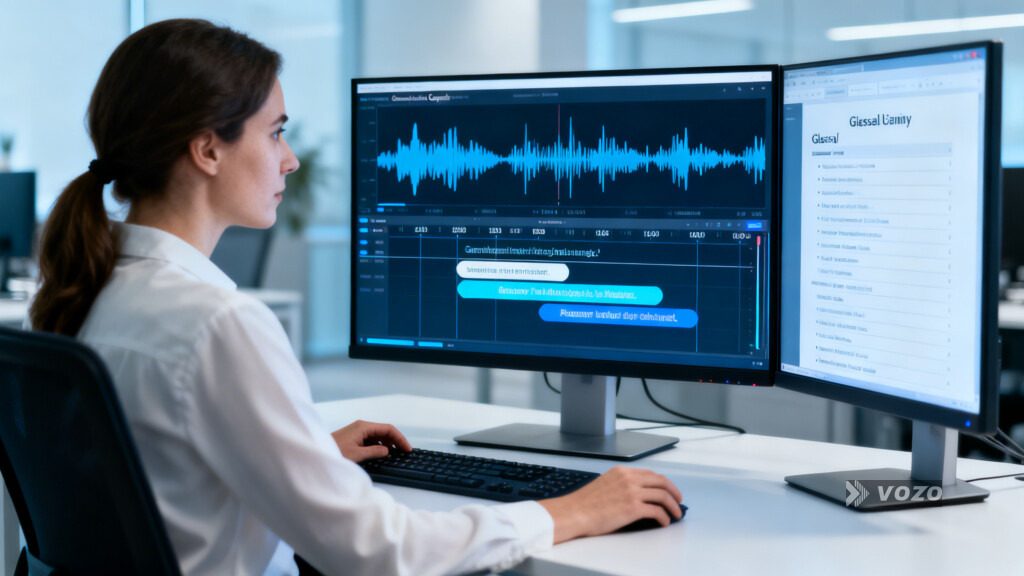
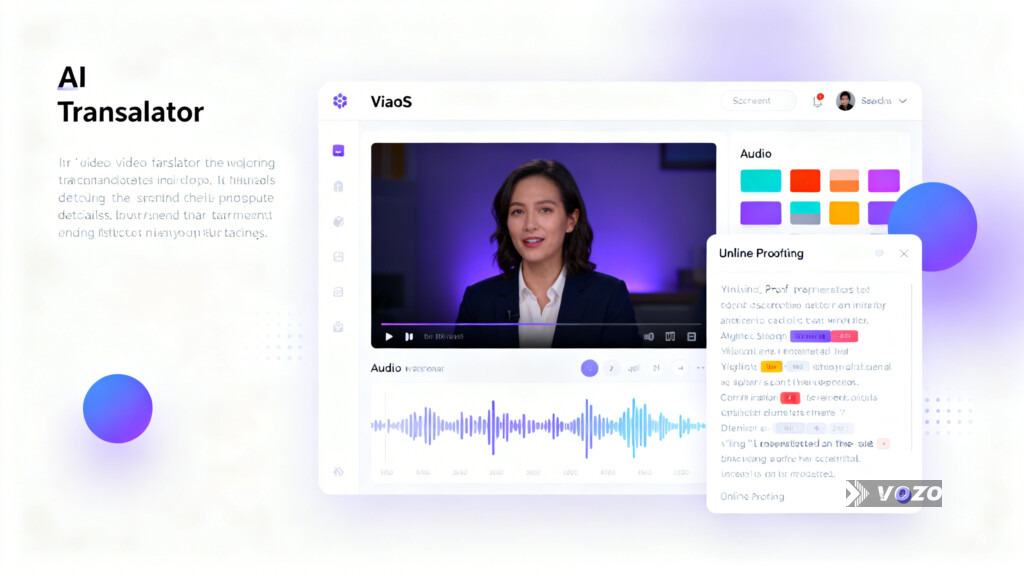
Un flux de travail pratique consiste à générer une ébauche avec un outil d'IA, puis à la modifier en profondeur. En voici un exemple, Le traducteur vidéo de Vozo peut traduire votre vidéo en allemand tout en générant des sous-titres, et il prend également en charge :
- Doublure naturelle
- Clonage vocal avec VoiceREAL™
- Synchronisation facultative avec LipREAL™
- Un éditeur de relecture intégré pour une amélioration en temps réel
Si vous envisagez également de faire du voiceover en allemand, Vozo's AI Dubbing permet d'effectuer un doublage automatique des vidéos en 60+ langues (y compris l'allemand) avec des voix d'IA qui correspondent au ton et au rythme, ce qui peut compléter vos sous-titres.
Pour les studios et les équipes de production qui ont besoin de s'agrandir, le système Vozo API permet d'intégrer des capacités de traduction et de doublage dans un flux de travail plus large (et est également disponible sur AWS Marketplace).
Conseil de sécurité : Vérifiez toujours manuellement les sous-titres AI, en particulier pour les scènes sensibles, le vocabulaire spécialisé et les noms.
Estimation du temps : 1 à 2 heures pour la génération et la configuration de l'IA, puis 4 à 8 heures par heure de vidéo pour un examen et un montage humains minutieux.
Réviser et affiner (l'étape qui rend le projet prêt pour le festival)
Il s'agit de l'étape la plus importante, quelle que soit la manière dont vous avez généré les sous-titres. Un bon passage en revue est celui où les sous-titres cessent de ressembler à une traduction et commencent à être lus comme s'ils faisaient partie du film.
Liste de contrôle de la qualité :
- Précision linguistique : grammaire, clarté et sens correct
- Terminologie : traduction cohérente des termes clés (en particulier pour la science, l'histoire, la médecine, le droit)
- L'adéquation culturelle : les expressions idiomatiques et les références doivent être naturelles en allemand
- Synchronisation et timing : les sous-titres doivent entrer et sortir en même temps que la parole
- Lisibilité : typiquement 3 à 7 secondes à l'écran par image de sous-titre
- Normes de formatage : 37 à 42 caractères par ligne, deux lignes maximum par cadre de sous-titre, et des retours à la ligne nets qui suivent le phrasé naturel.
- Relecture : ponctuation, majuscules et style cohérent
Outils :
- Subtitle Edit ou Aegisub pour une synchronisation et un formatage granulaires
- Éditeurs intégrés, tels que l'éditeur de relecture à l'intérieur de l'application Le traducteur vidéo de Vozo, pour une itération rapide
Conseil d'expert : Avoir une personne de langue maternelle allemande qui a été pas impliqués dans la traduction effectuent le dernier contrôle de qualité.
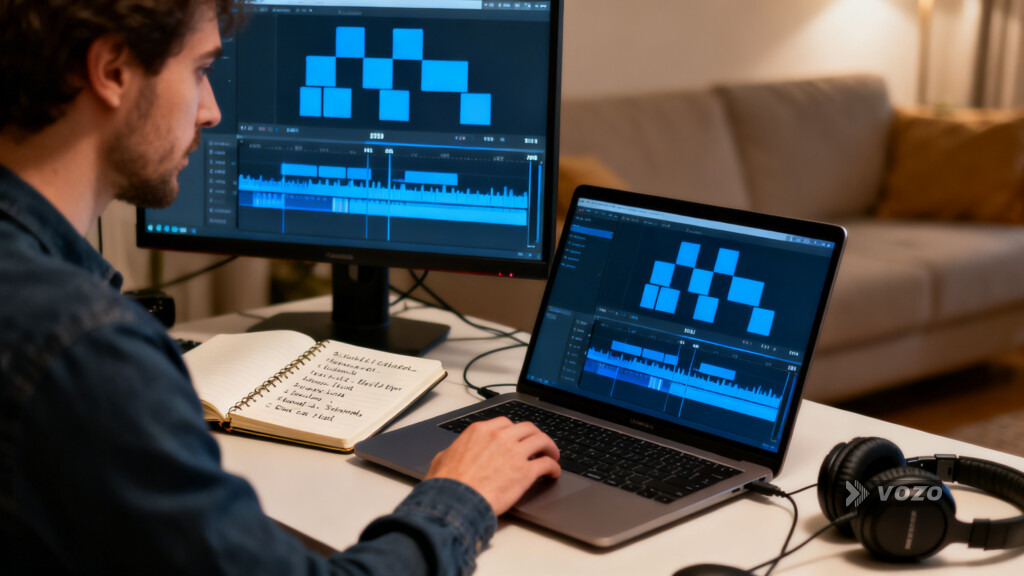
Estimation du temps : 4 à 10 heures par heure de vidéo pour un examen approfondi.
Intégrer et exporter correctement les sous-titres allemands
La plupart des produits livrables commencent par SRT et parfois VTT. Ce que vous exportez dépend du fait que les sous-titres doivent être facultatifs (soft) ou intégrés de manière permanente (hardcoded).
Voies d'intégration communes :
- YouTube et Vimeo : charger les sous-titres SRT ou VTT de manière à ce que les téléspectateurs puissent les activer ou les désactiver.
- Logiciel d'édition : importer le SRT dans Adobe Premiere Pro (ou similaire), le placer sur une piste de sous-titres et ajuster la synchronisation si nécessaire.
- Code en dur (burn-in) : exporter la vidéo avec des sous-titres intégrés de manière permanente.
Meilleures pratiques en matière de codage en dur :
- Polices : utilisez des options très lisibles telles que Arial ou Helvetica.
- Maintenir un contraste fort, envisager un contour ou une ombre subtile
- Utilisez une boîte d'arrière-plan semi-transparente si les scènes sont visuellement chargées.
- Assurez-vous que les paramètres d'exportation correspondent à la fréquence d'images et à la résolution d'origine.
Flux de travail mobile : Si vous avez besoin de sous-titres pour les coupures sociales, L'éditeur vidéo de Vozo (BlinkCaptions) prend en charge l'édition mobile des sous-titres.
Conseil d'expert : Dans la mesure du possible, livrez à la fois un fichier de sous-titres (SRT) et une version codée en dur. Les distributeurs apprécient souvent cette flexibilité.
Estimation du temps : 1 à 3 heures pour l'intégration, l'exportation et le test des appareils.
Avantages et inconvénients de chaque méthode
Services professionnels de sous-titrage en allemand
Pour
- Précision maximale et nuances culturelles
- Des processus d'assurance qualité solides et un formatage conforme aux normes de l'industrie
- Délais souvent rapides, y compris des délais d'urgence de 12 à 24 heures.
Cons
- Coût le plus élevé (souvent de 6 à 26 £ par minute, plus les frais minimums)
- Moins de contrôle direct que lorsqu'on travaille avec une seule personne
Sous-titreurs allemands indépendants
Pour
- Communication directe et terminologie adaptée
- Tarification flexible (par minute ou par mot)
- Idéal pour les sujets de niche lorsque vous trouvez le bon spécialiste
Cons
- Nécessite un contrôle et une gestion de projet
- La qualité varie davantage que celle des agences, à moins que vous ne procédiez à des tests minutieux
Outils alimentés par l'IA (avec examen humain)
Pour
- Le projet initial le plus rapide, souvent en quelques minutes
- Très rentable pour les coupes précoces et les budgets serrés
- Facilité d'itération, en particulier avec les éditeurs intégrés
Cons
- L'évaluation humaine est essentielle pour les documentaires
- Risque de traduction erronée de noms, de termes techniques ou de formulations sensibles sans contrôle de qualité
Les erreurs courantes à éviter
- Sous-estimation de l'évaluation humaine (l'IA seule est risquée pour la crédibilité)
- Ignorer les nuances culturelles (les traductions littérales tombent souvent à plat en allemand)
- Mauvais timing et mauvaise synchronisation (distrayant et frustrant à regarder)
- Mauvaise mise en forme (trop de caractères par ligne, polices de caractères illisibles, sauts de ligne maladroits)
- Ne pas préciser le public et le contexte au traducteur
- Utilisation d'un son de mauvaise qualité (nuit à la précision de la transcription et augmente le temps d'édition)
- Choisir l'option la moins chère sans contrôle
- Négliger la confidentialité et la sécurité des données avec des services tiers
- Absence de sauvegarde des fichiers originaux
- Ne pas tester les sous-titres sur la télévision, les ordinateurs de bureau et les téléphones portables
Dépannage : solutions rapides aux problèmes courants
Problème : Les sous-titres ne sont pas synchronisés
- Utilisez le réglage du délai de sous-titrage du lecteur s'il est disponible
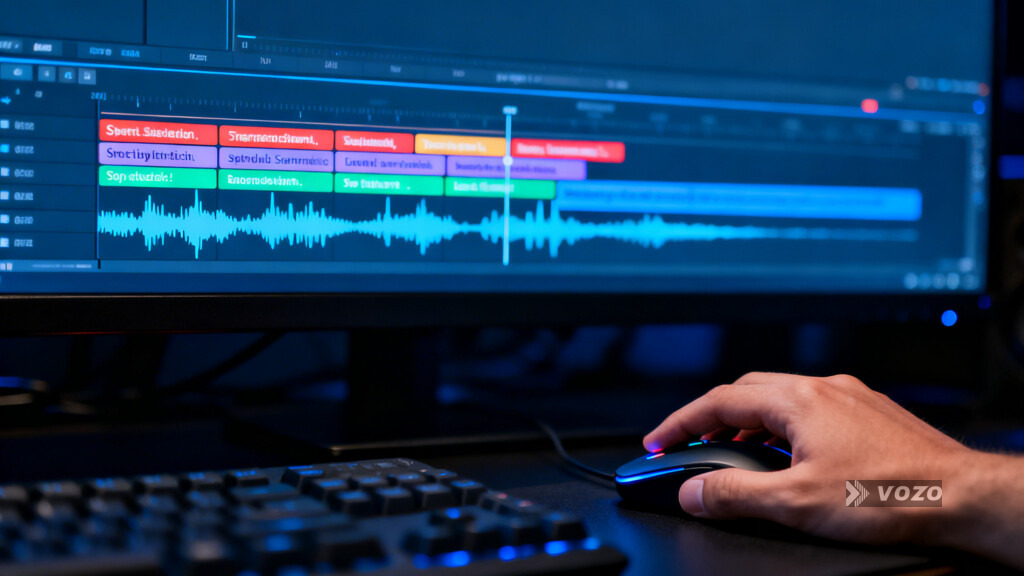
- Dans l'édition des sous-titres, utilisez Décaler les temps ou Ajuster tous les temps.
- Réexportation à partir de votre éditeur avec un alignement correct des pistes de sous-titres
Problème : Les sous-titres de l'IA comportent des erreurs importantes ou des formulations maladroites.
- Correct dans un éditeur tel que celui qui se trouve à l'intérieur Le traducteur vidéo de Vozo
- Embaucher un relecteur allemand pour la révision de la traduction automatique (MTPE)
- Fournir une transcription de haute qualité pour améliorer la contribution de l'IA
Problème : Les sous-titres sont trop rapides ou trop lents
- Prolonger la durée des images clés
- Diviser les phrases longues en plusieurs cadres
- Fusionner des images consécutives très courtes lorsqu'elles ne forment qu'une seule pensée
Problème : Les sous-titres ne s'affichent pas sur YouTube
- Confirmer le format (SRT est le plus sûr)
- Suivre les directives de téléchargement de la plateforme
- Recharger, car les problèmes d'affichage peuvent être temporaires.
Problème : La terminologie n'est pas cohérente
- Fournir un glossaire des termes allemands préférés
- Vérifier auprès d'experts en la matière
- Améliorer la clarté du script source avant la traduction (aide l'IA et les humains)
Problème : Les sous-titres sont difficiles à lire sur les scènes lumineuses ou complexes
- Ajout d'une boîte d'arrière-plan semi-transparente lors de la gravure
- Utiliser un style très contrasté (blanc avec un contour ou une ombre noire).
- Augmenter la taille des caractères sans masquer les éléments visuels importants
Question : Les services professionnels dépassent le budget
- Utiliser un flux de travail hybride : version AI et relecteur indépendant
- Négociez un prix au mot si votre documentaire comporte moins de dialogues.
- Donner la priorité à la traduction humaine pour les segments critiques, à l'IA pour les sections moins cruciales (le cas échéant).
FAQ : Sous-titres allemands pour les documentaires
Quel est le meilleur format de fichier pour les sous-titres allemands ?
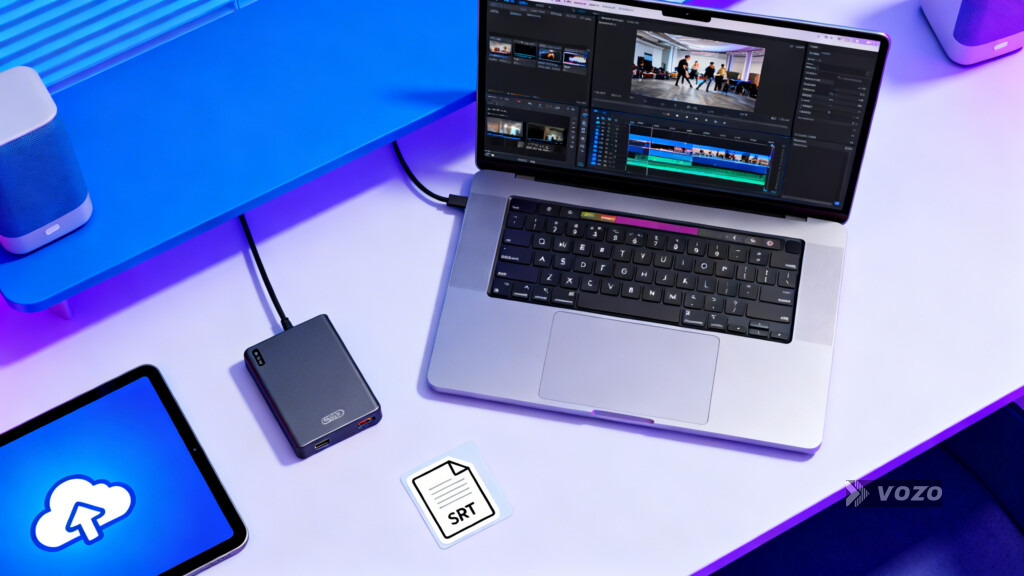
SRT est le plus universellement compatible. Le VTT est également courant, en particulier pour la vidéo sur le web.
Combien coûte le sous-titrage en allemand d'un documentaire ?
Les services professionnels fonctionnent souvent De 6 à 26 £ par minute. Les free-lances peuvent facturer 6,5 € par minute, plus QC, ou $0,10 à $0,14 par mot. L'IA est généralement moins chère mais nécessite une post-édition.
Puis-je utiliser Google Translate pour les sous-titres allemands des documentaires ?
Il peut produire un brouillon, mais il n'est pas recommandé pour les documentaires professionnels, car les nuances, le contexte et la terminologie en pâtissent souvent. La révision humaine est cruciale.
Combien de temps faut-il pour obtenir des sous-titres en allemand ?
Une livraison professionnelle urgente peut être 12 à 24 heures. Les free-lances prennent souvent 3 à 7 jours. Les projets d'IA peuvent prendre quelques minutes, mais l'édition peut prendre des heures, voire des jours.
Quelle est la différence entre les sous-titres codés en clair et les sous-titres codés en dur ?
Les sous-titres logiciels sont des fichiers distincts que les téléspectateurs peuvent activer ou désactiver. Les sous-titres codés en dur sont intégrés dans la vidéo et ne peuvent pas être désactivés.
Ai-je besoin d'une transcription pour obtenir des sous-titres en allemand ?
Ce n'est pas obligatoire, mais une bonne transcription peut réduire les coûts et augmenter la précision, tant pour les humains que pour l'IA.
Quelle est l'importance du contexte culturel dans les sous-titres allemands ?
Extrêmement important. Les documentaires reposent sur la précision, et le public allemand remarque les tournures de phrases peu naturelles et les tonalités mal adaptées.
Puis-je doubler en allemand au lieu de sous-titrer ?
Oui. Vozo's AI Dubbing peut générer un doublage en allemand, et Le traducteur vidéo de Vozo prend également en charge le doublage naturel, le clonage de la voix et la synchronisation labiale en option.
Que se passe-t-il si mon documentaire a plusieurs intervenants ?
Les services professionnels et les outils d'IA avancés peuvent prendre en charge l'identification de plusieurs locuteurs. Faites de la différenciation des locuteurs une exigence si la clarté en dépend.
Existe-t-il une application mobile permettant d'éditer des sous-titres en déplacement ?
Oui, Les BlinkCaptions de Vozo prend en charge les flux de travail mobiles pour les sous-titres et les légendes.
