

translate Chinese product videos to English
Selling into the US, UK, Canada, and Europe is rarely blocked by product quality alone. More often, it is blocked by comprehension and trust. A great Chinese product demo can still underperform in Western markets if the English feels unnatural, if measurements are confusing, or if the voiceover sounds off for the category.
The upside is huge. CSA Research has found that 75 percent of consumers are more likely to buy when product information is in their native language, and over half (56.2 percent) will spend more when information is localized. In other words, investing in Alibaba product video English translation and broader localization is not cosmetic, it is a conversion lever.
I’ll show you how to translate Chinese product videos to English for Western markets using a workflow that balances speed, quality, and brand safety.
What it means to translate product videos for Western markets
Translating Chinese product videos to English for Western markets means more than converting Mandarin words into English.
It usually includes a mix of:
- Tradução: converting meaning accurately
- Localização: adapting for cultural expectations, platform norms, and buyer psychology
- Legendagem: readable captions timed to speech
- Dobragem: replacing the spoken audio with natural English
- sincronização labial (optional): matching mouth movements to the new audio for a native feel
- Market fit edits: trimming, reordering, or adding clarifying shots for Western viewers
Think of it as moving from understandable to trustworthy, which many localization teams now frame as the real 2026 challenge: content can be correct yet still fail to persuade.
Step-by-step workflow (speed, quality, and trust)
Passo a passo
Step 1: Choose the right English variant and target viewer
Before you translate anything, define what English actually means for your launch.
Decide:
- Region: US vs UK vs Australia (spelling, vocabulary, tone)
- Público: B2B procurement, Amazon-style retail shoppers, distributors, or end users
- Buying context: mobile social scroll, product page, sales deck, or trade show loop
Exemplo:
- A tool demo for US DIY shoppers should favor plain language, strong benefits, and fast pacing.
- The same tool for B2B buyers should include specs, compliance references, and clearer process shots.
This step prevents rework later and improves Chinese supplier video localization because your translation choices will be aligned to buyer expectations.
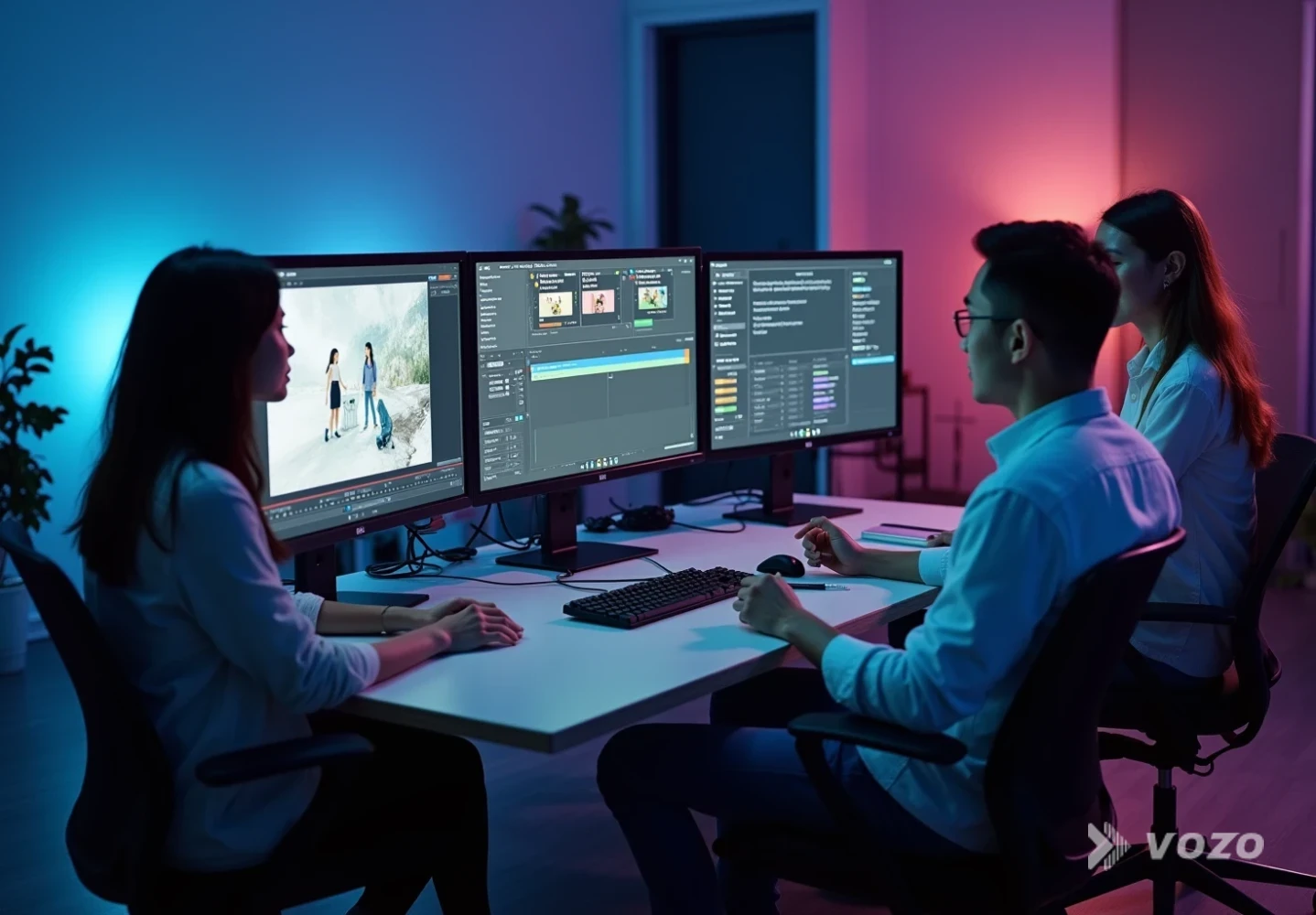
Step 2: Audit the source video for translation traps
Many problems that show up as bad translation are actually source-video issues.
Do a quick audit for:
- Dense technical jargon with no definitions
- Fast speech over loud factory noise
- On-screen labels or packaging that contradict spoken claims
- Measurements in metric only (or mixed units)
- Claims that could trigger compliance issues in Western markets (for example, medical or safety claims)
Dica prática:
- If the video is noisy, plan to dub instead of relying on speech-to-text subtitles alone.
- If the pacing is fast, plan to shorten sentences in the English script so subtitles stay readable.
Step 3: Decide your localization method (subtitles, dubbing, or both)
Most teams do best with a staged approach.
A commonly recommended 2026 best practice is to start with human-reviewed subtitles first, then invest in higher-cost dubbing only for markets that show traction. This avoids pushing imperfect dubbing everywhere, which can harm perceived quality more than leaving the original audio.
Choose based on goal:
- Subtitles first: fastest and lowest cost, great for testing and catalog-scale content
- Dobragem: higher engagement when viewers do not want to read
- Subtitles plus dubbing: best experience, also improves accessibility and silent autoplay viewing
Data point worth knowing: Some industry guidance notes subtitle-only experiences can reduce completion rates meaningfully compared to voice-led viewing. If your video is mid to bottom funnel, dubbing is often worth it.
Step 4: Create a translation-ready script (even if the original has none)
If your source video is unscripted, create a script anyway.
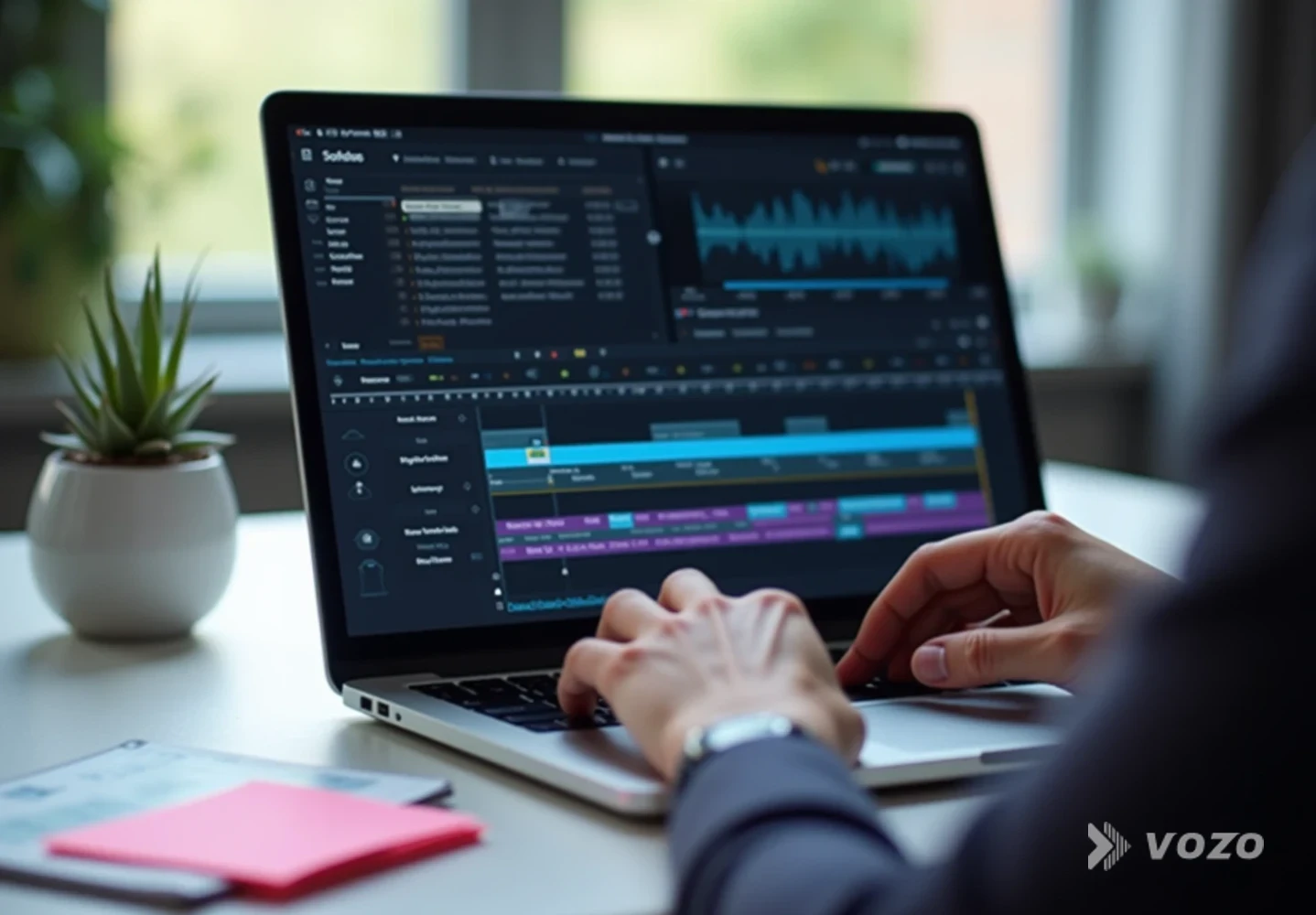
Fluxo de trabalho:
- Transcribe the Chinese audio (include speaker changes and key product terms).
- Clean it into a spoken script, not a literal transcript.
- Add a terminology list (brand names, model numbers, materials, certifications).
Practical rules that improve translation quality:
- Avoid idioms and slang that will not map well into English.
- Use short sentences, especially for subtitles.
- Define technical terms once, then stay consistent.
- Decide how to translate units (include both metric and imperial if selling broadly).
This is the foundation of high-quality Chinese product demo English translation.
Step 5: Translate, then localize (do not stop at literal English)
A literal translation can be grammatically correct and still feel suspicious to Western buyers.
Localize by adapting:
- Tone: confident, direct, benefit-forward
- Proof points: add clarifying context Western buyers expect (warranty, compatibility, materials)
- Cultural norms: remove over-promising phrasing and make claims precise
- Formatting: decimals, dates, and measurements
Exemplo: If the Chinese script says “very convenient, very practical,” a Western-friendly version might be “sets up in under two minutes” or “fits standard 1/4-inch mounts,” assuming you can support it.
Step 6: Produce English subtitles that people can actually read
Good subtitles are not a transcript. They are a reading experience.
Subtitle best practices:
- Keep lines short and break at natural phrase boundaries.
- Time them so viewers have enough reading time.
- Use consistent capitalization and punctuation.
- Do not overload the screen during fast product action.
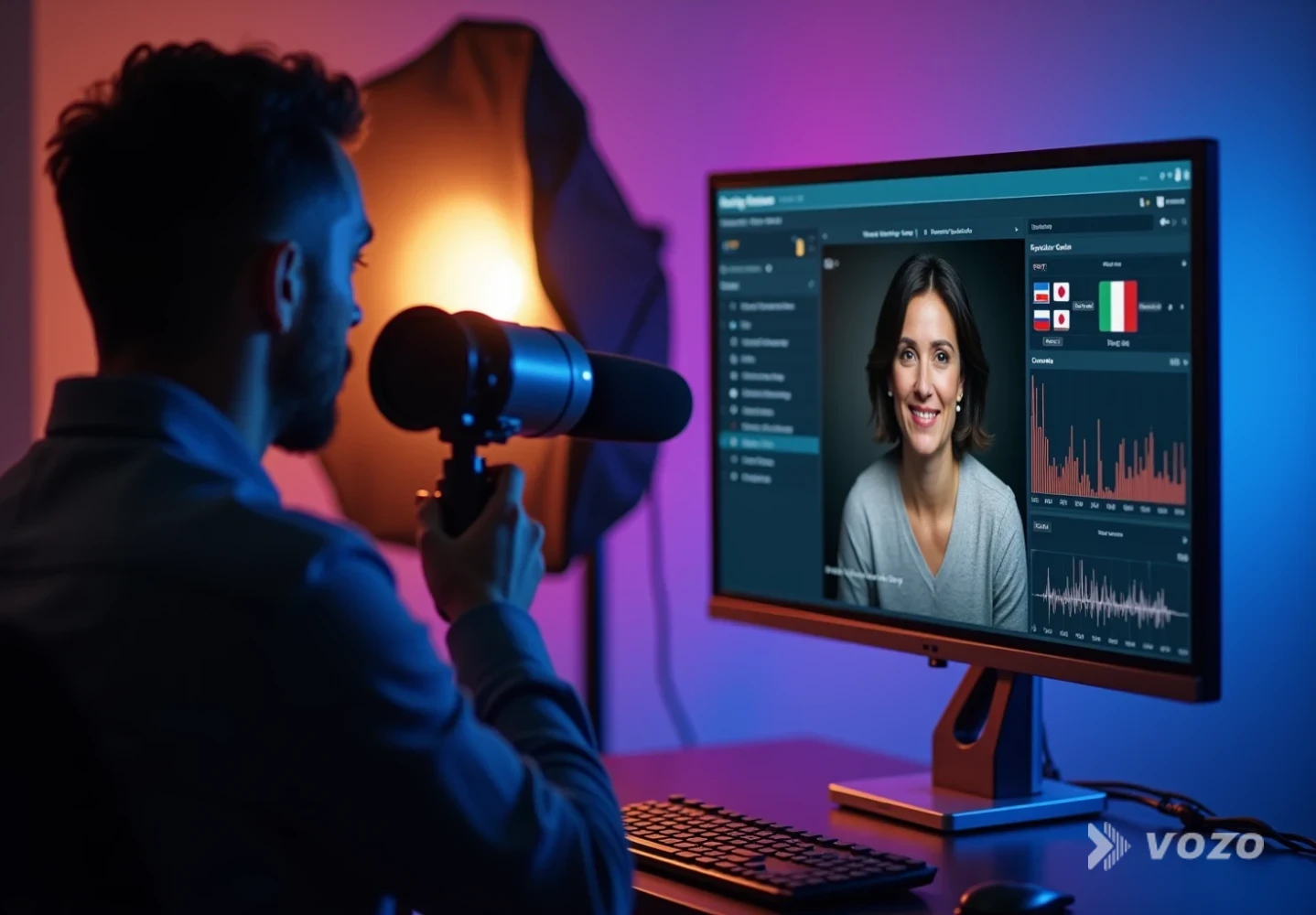
Quality control checklist:
- Technical terms match the product page and packaging.
- Model numbers are correct.
- Safety notes are clear and not hidden by quick timing.
If you want a streamlined workflow for both subtitles and dubbing in one place, Tradutor de vídeo do Vozo is a strong editorial pick: https://www.vozo.ai/video-translate. It supports translation into 110+ languages with natural dubbing, voice cloning (VoiceREAL), optional lip sync (LipREAL), and includes a built-in proofreading editor so teams can refine wording and timing without juggling extra tools.
Step 7: Add natural English dubbing (when it impacts sales)
Dubbing is where trust is won or lost.
Modern AI dubbing can be dramatically faster than traditional studio workflows. Some industry sources report organizations seeing 80 to 95 percent cost reductions and 90 to 97 percent time savings compared with traditional multilingual production, especially at scale. But high-stakes videos still benefit from human review for tone, pronunciation, and compliance.
What to tune for Western markets:
- Pacing: English often needs different rhythm than Mandarin.
- Sublinhado: highlight benefits early (the first 3 to 8 seconds matter).
- Pronunciation: brand names, materials, and place names.
- Emotion: avoid flat delivery for consumer categories.
If the audio track is the main asset (for example, a narrated demo or training), consider translating the audio directly with voice preservation. Tradutor de áudio do Vozo is built for this use case: https://www.vozo.ai/audio-translator.
Step 8: Use lip sync selectively for high-visibility videos
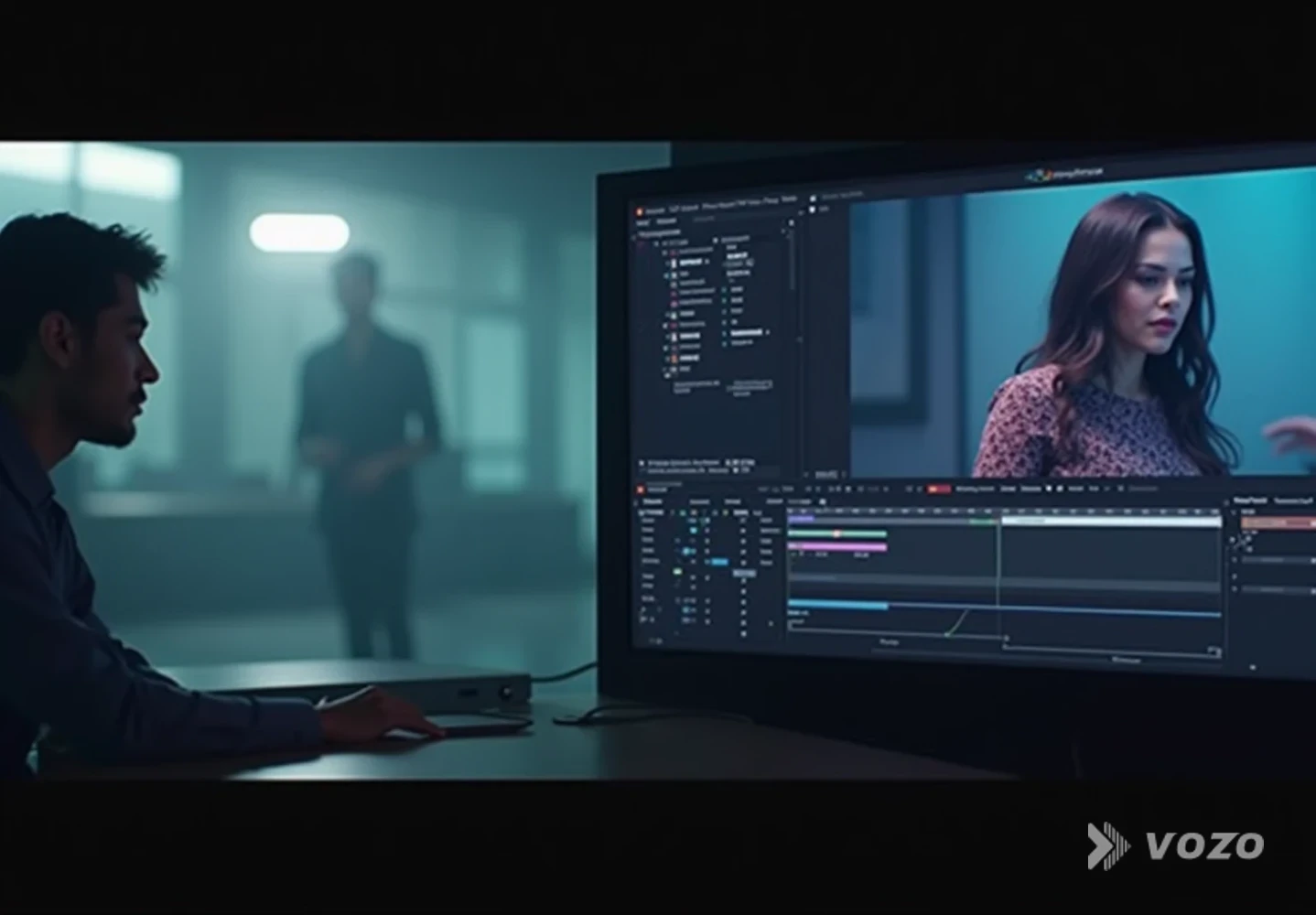
Lip sync is not always necessary. But when the speaker’s face is prominent, inaccurate mouth movement can break trust fast, especially for premium products.
Use lip sync for:
- Founder or spokesperson videos
- Talking-head explainers
- Customer testimonial style footage
- Any ad where the face is the focal point
Skip lip sync for:
- Hands-only demos
- Gravações de ecrã
- Fast-cut montage content
If you already have the English audio and just need mouth movements to match, Sincronização labial do Vozo tool is purpose-built for that: https://www.vozo.ai/lip-sync.
Step 9: Run human QA focused on buyer risk, not just grammar
AI gets you speed. QA gets you outcomes.
Human review should check:
- Cultural fit: does it sound like a real Western product video?
- Exatidão: are specs and claims correct?
- Conformidade: are restricted claims removed or qualified?
- Persuasion: does the hook land early, and is the value clear?
A useful mindset from localization strategy trends is that localization is trust infrastructure. Consistent terminology, coherent messaging, and disciplined claims are trust signals.
Step 10: Publish with multilingual SEO and platform-specific exports
Translation only pays off if people find the localized video.
Do this alongside video localization:
- Localize the product page and landing page to match the video.
- Use English keywords in the title, description, and chapters.
- Export in the right formats for each platform (captions, burned-in subtitles, separate subtitle files).
Why this matters: multilingual SEO is increasingly inseparable from localization strategy, especially for eCommerce. Localized assets should not live in isolation.
If you are repurposing a long demo into social clips after translation, a dedicated shorts workflow can help. Vozo's Long to Shorts is designed to cut long videos into multiple short clips with auto-reframing and subtitles: https://www.vozo.ai/video-clip-generator.
Pros and cons of common methods
Method 1: English subtitles only
Prós
- Fast turnaround and lower cost
- Works well for testing new markets
- Preserves original speaker authenticity
Contras
- Some viewers will not read
- Lower emotional impact than voice
- Can feel foreign, which may reduce trust for premium products
Method 2: English dubbing only
Prós
- Higher engagement for many Western audiences
- Better for ads, product pages, and mid-funnel demos
- Stronger clarity in noisy footage
Contras
- Requires careful voice choice and QA
- Poor dubbing can damage brand perception
- Higher effort than subtitles alone
Method 3: Subtitles plus dubbing
Prós
- Best overall viewing experience
- Supports silent autoplay and accessibility
- Strongest option for conversion-oriented pages
Contras
- More steps to produce and review
- Needs tighter version control (script, captions, audio)
- Higher coordination cost across revisions and exports
Method 4: Dubbing plus lip sync (selective)
Prós
- Most native feel when a speaker is on camera
- Raises perceived professionalism
- Useful for high-stakes flagship assets
Contras
- Not necessary for every video
- Requires extra QA and rendering time
- More moving parts across script, voice, and visual timing
A practical example workflow (fast, scalable, safe)
If you are handling many SKUs or supplier videos, use this playbook:
- Start with subtitle localization for your whole catalog.
- Track performance by market and channel.
- Promote winners to dubbing.
- Add lip sync only for the top performers and face-forward assets.
- Keep a glossary and style guide so terminology stays consistent across updates.
This aligns with modern localization guidance: use AI for volume, then apply deeper investment where the business impact is proven.
Turn understandable into buyable
If the goal is to translate Chinese video to English, a basic subtitle file can get you there. If the goal is to win Western customers, you need a repeatable localization process that protects accuracy, builds trust, and matches how Western buyers evaluate products.
Start with the steps above, and when you want a unified workflow for translation, dubbing, voice preservation, and optional lip sync, Tradutor de vídeo do Vozo is a practical place to centralize production: https://www.vozo.ai/video-translate.
The fastest path to better results is simple: localize one high-intent product demo first, measure the lift, then scale the same workflow across the rest of your catalog.
