

YouTube Strategy: Grow, Engage, Monetize
YouTube is not just a video platform. It is the world’s second-most visited website (after Google) and had over 2.7 billion monthly active users as of 2023 (Statista). That scale is exactly why a smart YouTube strategy matters. With the right plan, you can turn a single channel into a predictable engine for traffic, community, and revenue.
I’ll show you how to build a practical, repeatable YouTube video strategy that improves discoverability, strengthens engagement, and unlocks multiple monetization paths, without relying on luck or hype.
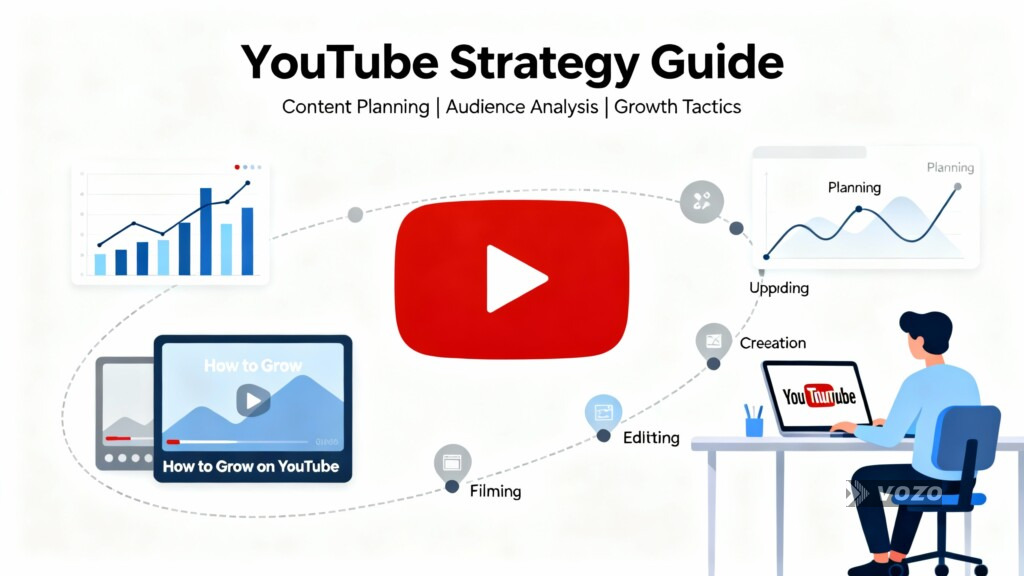
What is a YouTube strategy?
A YouTube strategy is your end-to-end plan for how you will:
- Choose a niche and serve a specific audience
- Create videos with consistent themes and formats
- Optimize for YouTube SEO and recommendations
- Build community signals (comments, likes, shares, returning viewers)
- Monetize through ads and diversified income streams
- Use YouTube Analytics to improve results over time
In other words, it is the system behind your content. It helps YouTube understand who your videos are for, helps viewers trust what they will get from your channel, and helps you grow consistently over 6 to 12 months rather than hoping one video goes viral.
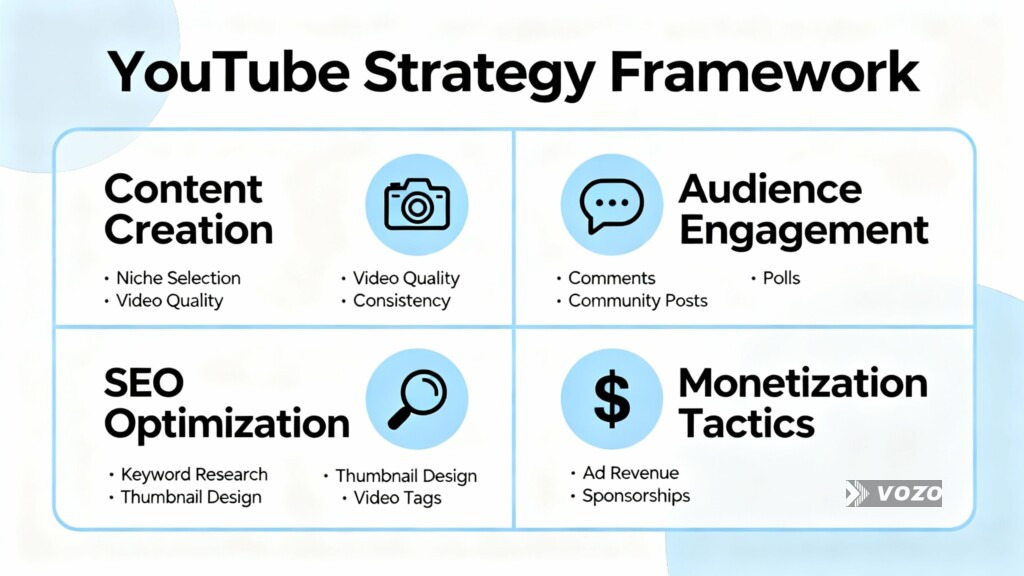
Prerequisites and tools needed
Before you start, set yourself up with the basics so you can publish consistently.
YouTube account and channel
- A Google account is required to create a YouTube channel.
- For businesses and serious creators, set up a Brand Account so multiple managers can work in YouTube Studio and ownership transitions are easier.
- Get comfortable inside YouTube Studio for uploads, comments, and analytics.
Video recording equipment
- Camera: a modern smartphone can record 4K, or use a DSLR or mirrorless like Canon EOS M50 or Sony Alpha a6000 series, or a camcorder.
- Microphone (do not skip this): lavalier options like Rode SmartLav+ or Deity V-Lav, USB mics like Blue Yeti or Rode NT-USB Mini, or shotgun mics like Rode VideoMicro or Sennheiser MKE 400.
- Lighting: natural light is great, otherwise ring lights (Neewer, Elgato Ring Light), softboxes, or LED panels like Godox SL60W.
- Tripod or stabilizer: Joby GorillaPod, Manfrotto Pixi, or DJI Osmo Mobile for smartphones.
Editing and design software
- Beginner editing: DaVinci Resolve (free), iMovie, Shotcut, CapCut.
- Pro editing: Adobe Premiere Pro, Final Cut Pro, DaVinci Resolve Studio.
- Thumbnails and channel art: Canva, Adobe Photoshop, Affinity Photo, GIMP.
SEO, analytics, planning, and optional tools
- YouTube Analytics (built-in)
- Google Keyword Planner, Google Trends
- VidIQ, TubeBuddy
- SEMrush, Ahrefs (advanced keyword research)
- Content calendar tools: Google Calendar, Trello, Asana, Notion
- Live streaming: OBS Studio, Streamlabs Desktop, Ecamm Live
- Monetization setup (optional at first): Google AdSense, Patreon, Shopify, affiliate accounts like Amazon Associates
Time commitment and policies
- Plan for 5 to 10 hours per week minimum to create, edit, optimize, and engage.
- Consistent effort for 6 to 12 months typically produces initial growth.
- Learn YouTube Community Guidelines, copyright policies, and monetization policies early. Policy issues can lead to strikes or termination, which is avoidable with basic diligence.
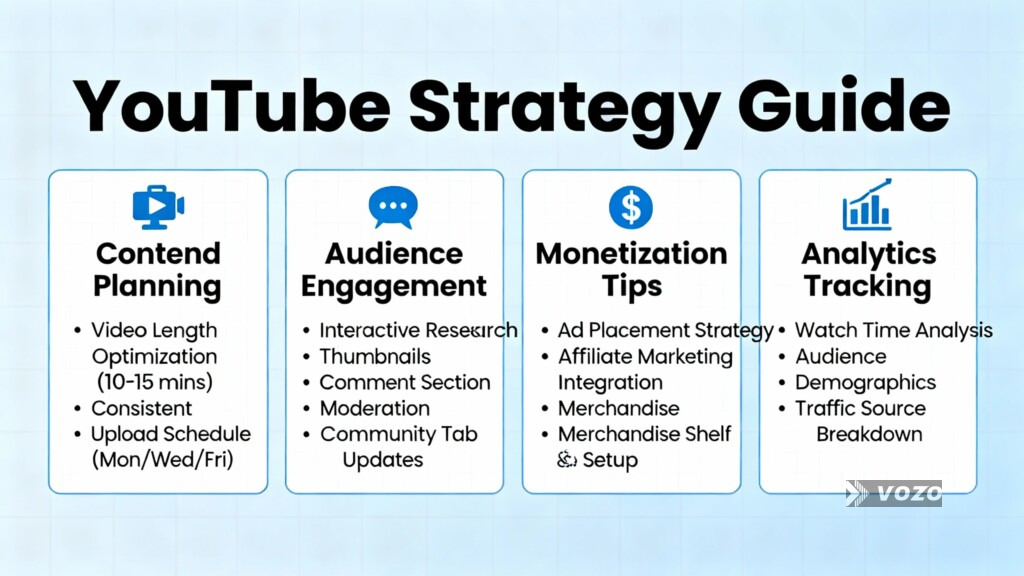
Step-by-step YouTube strategy
Step-by-step instructions
Define your niche, audience, and content pillars
Time estimate: 2 to 4 hours to start, then ongoing refinement.
This step is how you create a channel identity that YouTube can classify and viewers can instantly understand.
Identify your core niche and value proposition
Start with a focused niche, not a broad category. “Fitness” is broad. “Bodyweight workouts for busy beginners at home” is focused.
Do this:
- Identify your expertise or passion and the specific outcome you deliver.
- Research existing channels in your niche to find content gaps and proven formats.
- Define what makes your angle different (your background, your style, your process, your constraints, your audience).
- Choose a niche you can commit to long-term. Sustainability beats novelty.
A focused niche helps YouTube’s algorithm recommend your videos to the right viewers because your content is consistent and predictable.
Research and understand your target audience
Build simple audience personas:
- Age range and demographics
- Pain points and goals
- Preferred formats (how-to, reviews, vlogs, Shorts, live)
- Viewing habits (mobile vs desktop, weekday vs weekend)
How to research quickly:
- Use YouTube autocomplete and Google Trends for real search behavior.
- Read competitor comments to find questions people keep asking.
- Notice where your audience hangs out (Reddit, TikTok, Instagram, Facebook groups) and what language they use.
Establish content pillars and brainstorm video ideas
Create 3 to 5 evergreen pillars, then generate 20 to 30 video ideas per pillar. Example for a cooking channel:
- Quick weeknight meals
- Baking tutorials
- International cuisine
Include a mix of formats that perform consistently on YouTube, such as how-to videos, product reviews, vlogs, and educational content (YouTube Creator Academy). Add Shorts for quick tips and discovery, and long-form videos (often 10+ minutes) for deeper watch time when the topic warrants it (Buffer).
Map your next 1 to 3 months in a content calendar. Include seasonal topics and trends relevant to your niche.
Expert tip: Your niche should be specific enough to attract a dedicated audience, and broad enough to generate at least a year’s worth of ideas.
Create content (planning, production, editing)
Time estimate: 2 to 4 hours for a simple vlog, 8 to 20+ hours for deep tutorials.
Scripting, storyboarding, and pre-production
Do not hit record without a plan. Even casual creators benefit from structure.
Include:
- A script or detailed outline with key talking points
- Calls to action (subscribe, comment, watch next)
- Visual cues for B-roll and on-screen text
- A strong intro plan, since the first 15 to 30 seconds heavily influence retention
Safety tip: If your video involves hazards (tools, cooking, travel, fitness), document safety precautions in the plan and communicate them clearly.
Filming and audio recording best practices
Baseline quality standards:
- Resolution: 1080p minimum, 4K preferred for future-proofing
- Framing: rule of thirds, proper headroom, eye contact if you talk to camera
- Lighting: aim for a three-point setup (key, fill, back light) when possible, and avoid backlighting that silhouettes you
- Audio: use an external mic close to the speaker and monitor levels to prevent clipping
- Background: clean, uncluttered, relevant to your brand
Efficiency tactic:
- Batch filming: record multiple videos in one session to reduce setup time and keep your upload schedule consistent.
Post-production: editing, graphics, sound design
In your editing software (DaVinci Resolve, Premiere Pro, Final Cut Pro):
- Cut dead air, stutters, and filler to improve pacing
- Use B-roll, on-screen text, and simple graphics to maintain attention
- Apply basic color correction so clips match
- Clean audio, reduce noise, normalize volume, add royalty-free music at low volume (YouTube Audio Library is a reliable option)
- Add consistent branding elements (intro, outro, lower thirds)
Export settings:
- Format: MP4
- Codec: H.264
- Match original resolution and frame rate (24fps, 30fps, or 60fps)
- Bitrate targets: 1080p typically 8 to 12 Mbps, 4K typically 35 to 45 Mbps
Expert tip: A strong intro is crucial. Hook viewers with a clear promise, a compelling question, or a preview of the best moment.
Optimize for YouTube SEO and discoverability
Time estimate: 1 to 2 hours per video, then monitoring.
YouTube SEO is not optional. It is how you earn impressions and clicks, then convert them into watch time.
Keyword research and strategic placement
Use:
- YouTube search autocomplete
- Google Keyword Planner
- VidIQ, TubeBuddy
- SEMrush or Ahrefs for deeper research
Target both broad and long-tail keywords (SEMrush). Place them:
- In the title, ideally near the beginning
- In the first 2 to 3 sentences of the description
- Throughout the description naturally
- In tags (useful context, but generally less impactful than title and description)
Craft compelling titles and descriptions
Titles:
- Keep under 60 characters for clean display
- Make them keyword-rich and compelling
- Numbers and clear outcomes often help (“5 Best…”, “Ultimate Guide…”)
Descriptions:
- You can use up to 5,000 characters (Backlinko)
- Include a summary, keywords, timestamps, and links to relevant resources and playlists
- Add calls to action and links to your site or socials where appropriate
Expert tip: Add a channel hashtag (for example, #YourChannelName) in every description to help viewers discover more of your content.
Design high-impact thumbnails
Thumbnails strongly influence CTR, which is a key discovery signal (YouTube Creator Academy).
Best practices:
- Use custom thumbnails at 1280×720 pixels (minimum width 640)
- High contrast, clear font, simple composition
- Expressive faces when relevant
- Consistent brand elements (colors, logo, layout)
Test variations:
- Use TubeBuddy or VidIQ A/B testing features when available, or rotate designs and compare CTR and watch time.
Leverage end screens, cards, and playlists
- End screens: place in the last 5 to 20 seconds to promote another video, a playlist, subscribe, or an approved external link (YouTube Help).
- Cards: up to 5 per video, use them sparingly at moments of high relevance.
- Playlists: organize videos into themes to encourage binge-watching and increase session watch time.
- Channel trailer: create a 30 to 60 second trailer for new visitors that clearly explains the value of subscribing.
Safety tip: Only link to safe, appropriate destinations and follow YouTube’s external link policies.
Build community engagement and audience retention
Time estimate: 30 minutes to 2 hours daily or per upload.
Community signals help you grow because they create returning viewers, longer sessions, and stronger engagement.
Active comment management and interaction
- Reply to as many comments as possible on new uploads
- Ask a question in the video and invite answers in the comments
- Pin a thoughtful comment to model the conversation you want
- Moderate spam and hateful content to keep the environment healthy
- Like comments and use the heart icon to show appreciation
Social Media Examiner highlights that responding to comments and thanking viewers builds loyalty and repeat viewership.
Use the Community tab and live streams
Community tab:
- Post polls, questions, behind-the-scenes updates, and upcoming video teasers
- Use posts to learn what your audience wants next (YouTube Creator Academy)
Live streams:
- Run Q&As, tutorials, casual chats, or event coverage (Social Media Today)
- Promote streams in advance
- Acknowledge Super Chat and Super Stickers support during the stream
- Archive streams as regular videos to capture additional watch time later
Cross-promotion and collaboration
- Share teaser clips on Instagram, TikTok, X, and Facebook that lead back to the full video
- Embed videos on your website or blog to drive external traffic
- Collaborate with creators in your niche or complementary niches for audience overlap
- Participate in relevant forums and communities by adding value first, then sharing content when appropriate
Encourage subscriptions and notifications
Be direct, but not robotic:
- Mention subscribing naturally inside the video, not only at the end
- Ask viewers to like and comment when it fits the moment
- Encourage viewers to use the YouTube channel subscribe action and enable notifications if they want new uploads
Offer incentives carefully:
- Early access, exclusive videos, or behind-the-scenes content can make subscribing feel worthwhile.
Monetization models and revenue generation
Time estimate: ongoing, with 1 to 3 hours initial setup per method.
Relying only on ad revenue is risky. The most stable creators diversify.
YouTube Partner Program (YPP) and AdSense
YPP eligibility:
- 1,000 subscribers and 4,000 valid public watch hours in the past 12 months, or 10 million valid public Shorts views in 90 days
- Compliance with YouTube policies
Once eligible, apply in YouTube Studio and connect Google AdSense.
Ad formats include:
- Skippable, non-skippable, bumper, overlay, display
Optimization:
- For videos over 8 minutes, place mid-roll ads strategically to increase revenue without ruining the viewing experience.
- Submit accurate tax information in AdSense for payments.
Brand partnerships and sponsored content
This is often higher leverage than AdSense for established creators (Influencer Marketing Hub).
Key actions:
- Build a media kit with demographics, analytics, and rates
- Proactively pitch brands aligned with your niche
- Define deliverables, deadlines, and usage rights in writing
Transparency:
- Disclose sponsorships verbally and use YouTube’s paid promotion disclosure tool
- Follow FTC guidelines to protect trust and compliance
Direct audience support
Options include:
- Channel Memberships with tiers (emojis, badges, members-only videos, early access)
- Super Chat and Super Stickers during live streams and Premieres
- Patreon or other crowdfunding platforms for exclusive content
- Donation links (PayPal, others) in descriptions
Merchandise and affiliate marketing
Merch:
- Sell apparel and accessories through Shopify, Spring (formerly Teespring), or Spreadshirt
- Use the merchandise shelf when available
Affiliate marketing:
- Join programs like Amazon Associates
- Add unique affiliate links in descriptions
- Integrate products naturally, focusing on items you genuinely use and recommend
Pat Flynn of Smart Passive Income emphasizes that affiliate success comes from trust and relevance, not pushing random products.
Expert tip: Only promote products you truly believe in. Credibility compounds over time.
Emerging monetization (YouTube Shopping, digital products)
- YouTube Shopping lets you tag products in videos and live streams so viewers can buy without leaving YouTube (YouTube Official Blog).
- Digital products: sell courses, templates, presets, stock footage, or e-books that match your channel’s problem set.
- Licensing: license your footage to media outlets, advertisers, or other creators for extra revenue.
Safety tip: Watch for scams in sponsorship emails. Verify the company and never rush into a deal without a contract.
Measure performance and refine your strategy
Time estimate: 1 to 2 hours weekly, 4 to 8 hours monthly.
YouTube rewards creators who improve. Analytics is how you do it intentionally.
Deep dive into YouTube Analytics
Review these areas weekly:
- Overview: watch time, views, subscribers gained and lost, estimated revenue
- Reach: impressions, CTR, traffic sources (Search, Suggested, External)
- Engagement: audience retention graph, average view duration, likes, comments
- Audience: demographics, unique viewers, and when viewers are online
- Revenue: AdSense, memberships, Super Chat, and more
- Content: compare performance across formats and topics
Creator Insider repeatedly highlights watch time and audience retention as core algorithm signals.
A/B testing and optimization
- Test thumbnails and titles to improve CTR (VidIQ, TubeBuddy can help)
- Use retention graphs to identify exact moments where viewers drop off, then fix pacing, shorten intros, or improve clarity
- Experiment with call-to-action placement (early vs late) and track results
Competitive analysis and trend monitoring
- Study successful channels in your niche: their thumbnails, titles, pacing, and series structure
- Use YouTube Trending, Google Trends, and social listening to spot relevant topics
- Follow Creator Insider and official YouTube blogs for updates and policy changes
Iterative strategy refinement
- Do a monthly review and document what worked
- Adjust your content calendar toward high-performing pillars
- Keep upgrading skills in production, editing, and SEO
- Stay flexible and pivot when the data shows a better path
Expert tip: Do not obsess over subscriber count alone. Watch time, retention, and CTR are stronger indicators of quality and algorithm momentum.
Pros and cons of this YouTube strategy approach
Pros
- Clear niche and pillars make it easier for YouTube to recommend your videos to the right viewers
- SEO and thumbnail optimization improve discovery without extra ad spend
- Community systems increase loyalty and repeat views (strong long-term signal)
- Monetization diversification reduces dependence on AdSense swings
- Analytics-driven iteration makes growth more predictable over time
Cons
- Requires consistent time investment (often 5 to 10 hours per week)
- Early growth can be slow while the algorithm learns your audience
- Strong SEO and packaging (title, thumbnail) take practice and testing
- Monetization methods like sponsorships and affiliates require trust and compliance work (FTC, disclosures, contracts)
Common mistakes to avoid
- Inconsistent upload schedule, which reduces predictability and engagement (Tubefilter notes consistency drives return visits)
- Poor audio quality, which viewers abandon faster than imperfect video
- Neglecting YouTube SEO (titles, descriptions, thumbnails)
- Ignoring audience feedback in comments and posts
- Focusing solely on subscriber count instead of watch time and retention
- Clickbait without delivery, which causes bounces and trust loss
- Over-monetization (too many ads or constant sales pitches)
- Disregarding YouTube policies (copyright, Community Guidelines, monetization policies)
- Lack of a clear niche, trying to be everything to everyone
- Ignoring analytics and failing to adapt
- Keeping a static content strategy and not evolving with trends and platform changes
Troubleshooting
Low views on new videos
- Improve CTR with stronger thumbnails and titles
- Re-check keyword targeting and description setup
- Promote more aggressively on other platforms
- Review retention for early drop-offs and tighten the first minute
Stagnant subscriber growth
- Add clearer subscribe prompts and improve your channel trailer
- Engage more in comments and Community posts
- Collaborate with creators in your niche
- Make the value of subscribing obvious (series, weekly themes, early access)
Low audience retention
- Use the retention graph to identify drop-off timestamps
- Shorten intros and remove filler
- Improve pacing with B-roll and on-screen text
- Ensure the video delivers what the title and thumbnail promise
Low CTR
- Redesign thumbnails with higher contrast and simpler text
- Rewrite titles to emphasize outcome and curiosity, while staying accurate
- A/B test variations when possible
Not eligible for YPP yet
- Focus on either long-form watch hours or Shorts views, depending on your strengths
- Publish consistently and improve retention to raise total watch time
- Confirm every upload complies with monetization policies
Copyright strikes or Community Guideline issues
- Review YouTube’s copyright and Community Guidelines carefully
- Use YouTube Audio Library or properly licensed assets
- Get permission for copyrighted material
- Use YouTube’s dispute and counter-notification processes when appropriate
Burnout or lack of ideas
- Batch create videos
- Return to your content pillars and audience research
- Ask your community for ideas via polls
- Take short breaks and consider collaborations to share workload
Poor video or audio quality
- Upgrade lighting and use a dedicated microphone
- Learn basic audio cleanup in your editor
- Improve framing and composition
- Prioritize audio above everything else
FAQ
How often should I upload videos to YouTube?
Consistency matters more than frequency. Once a week is a strong baseline for many channels. Daily uploads can work in niches like gaming or news, but burnout is a risk. Choose a schedule you can sustain.
What’s the ideal video length for YouTube?
There is no universal best length. Videos over 8 minutes can include mid-roll ads for AdSense. Shorts are under 60 seconds. Make the video exactly as long as needed to deliver value, then cut filler.
How long does it take to get monetized on YouTube?
It varies widely. Some channels reach YPP in a few months, others take a year or more. The key is meeting 1,000 subscribers and 4,000 watch hours, or 10 million Shorts views, while staying policy-compliant.
Should I buy YouTube subscribers or views?
No. It violates YouTube policies, risks termination, and does not produce real engagement. Organic growth is the only sustainable path.
What’s more important: views or watch time?
Watch time is usually more important because it reflects real engagement and is a strong recommendation signal. A smaller number of viewers who watch longer often beats higher views with weak retention.
How can I promote my YouTube channel outside of YouTube?
Share teasers on social platforms, embed videos on your website or blog, use email newsletters, participate in relevant communities, and collaborate with other creators.
Is it okay to use copyrighted music in my videos?
Generally, no unless you have explicit permission or a proper license. Use royalty-free tracks or YouTube Audio Library to reduce risk of claims, demonetization, or removal.
How much do YouTubers earn per 1,000 views?
CPM varies by niche, audience demographics, ad formats, and advertiser demand. A common range is about $0.50 to $10+ per 1,000 monetized views, and most successful creators rely on more than AdSense.
What’s the best way to get ideas for new videos?
Use YouTube search suggestions, Google Trends, competitor analysis, and your own comments. Audience questions are often your best script outlines.
How important are thumbnails for video success?
Extremely important. Thumbnails directly affect CTR, and CTR heavily influences how widely YouTube tests and recommends your videos.
Put your strategy into action
YouTube rewards creators who are consistent, audience-focused, and data-driven. If you take anything from this guide, make it this: pick a clear niche, commit to content pillars, optimize every upload for discovery, and use analytics to refine what works.
Now take action: choose your niche, draft your first 3 content pillars, and plan your next four uploads in a calendar. Then publish, review the data, and improve. That is how a YouTube video strategy becomes real growth.
